
1840 The White Wedding Gown
Religion: Christianity
Time Period: 1840s
Type Of Garment: Dress
Tags: Bridal wear, Christianity, Dress, Imperialism, Missions, purity, Queen Victoria, Wedding, white
The Object:
If you’ve ever attended a traditional Western wedding, you’re likely familiar with the classic processional music announcing, “Here comes the bride, all dressed in white” (the unofficial lyrics to Richard Wagner’s 1850 “Bridal Chorus”). Moments later, the bride appears, gliding down the aisle in a white gown. Over time, the white wedding gown has become so iconic that many see it mainly as a fashion tradition rather than a religious symbol. Yet its ubiquity can obscure its origins: the gown is both a notable fashion artifact and a deeply coded Christian object.
The gown’s religious significance begins with its color. Color psychologist Faber Birren notes that white is widely associated with creativity, self‑reflection, enlightenment, hope, and clarity (Birren 2016). Symbolically, white has long represented purity, goodness, innocence, cleanliness, and perfection (Birren 2016)—qualities traditionally linked to the Christian God. It also signals a fresh beginning or renewed state of being. Because of these associations, white garments appear throughout Christian (Protestant and Catholic) rites of passage. For example, white baptismal robes signify a believer’s newfound spiritual identity, the cleansing of sin, and the start of a purified life (Ehrman 2011).
This symbolism extends into broader theological imagery. In Christian scripture, new believers enter the Church, described metaphorically as the “Bride of Christ” (Ephesians 5:25–32). The metaphor emphasizes a covenantal relationship marked by sacrificial love, purification, and the hope of ultimate unity in heaven. The Church is depicted as a radiant, holy, and spotless bride being prepared for her “bridegroom.”
Within this framework, the modern wedding gown takes on layered meaning. For brides, white comes to signify sexual purity, innocence, and moral integrity, values emphasized in Christian teaching (Ehrman 2011; Hurst 2011; Spunner 2011 ). At the same time, the gown marks a major life passage: entry into marriage, a new covenantal union that mirrors the spiritual language of renewal and devotion (Hurst 2011). In this way, the white wedding gown remains fashionable and cultural, yet also profoundly religious, even when its origins go unnoticed.
The Creator:
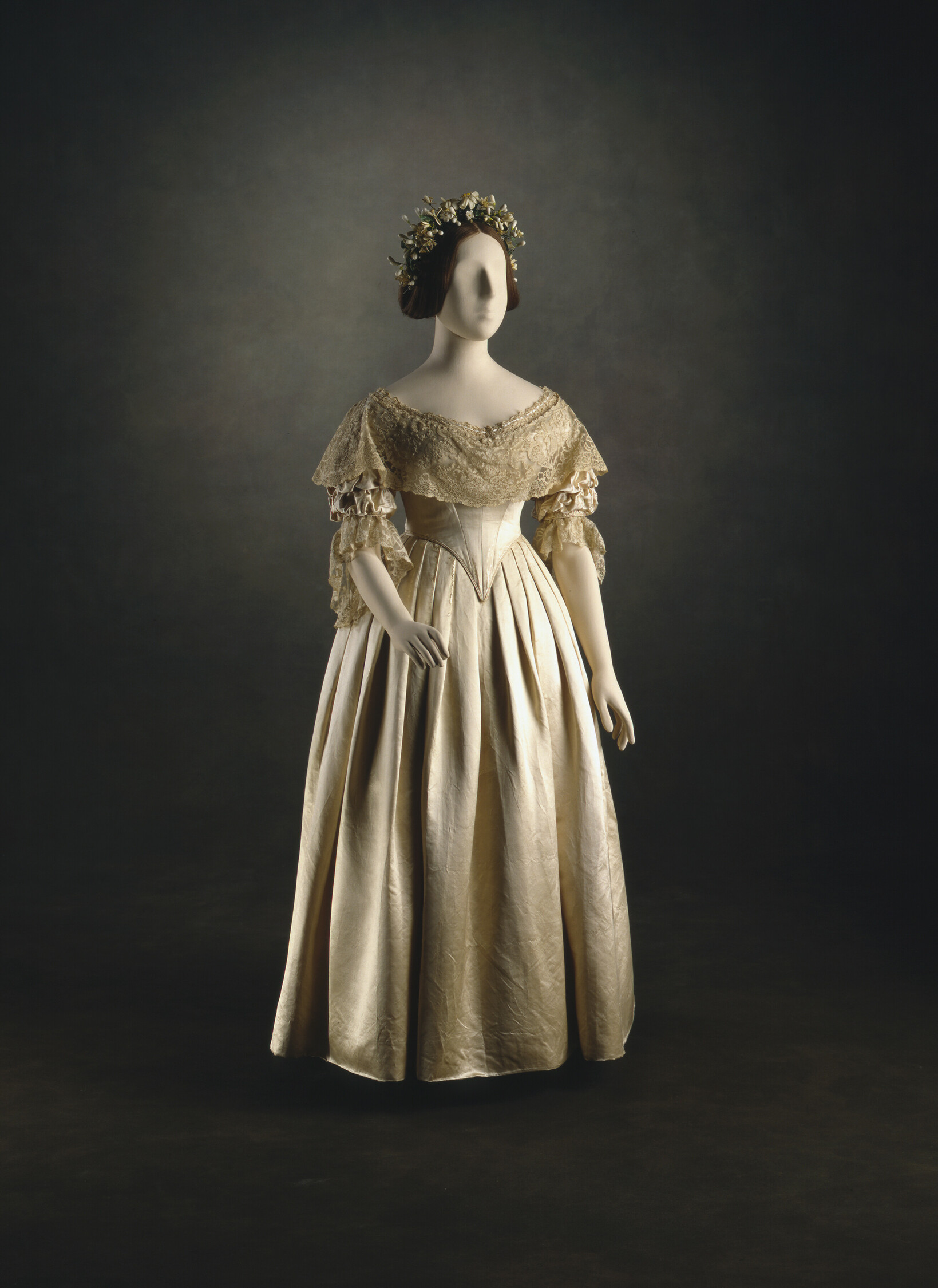
The genesis of the white dress as both a standard and symbol of Western traditional weddings has been widely tied to the wedding of Queen Victoria and Prince Albert of Saxe-Coburg. The royal wedding occurred on February 10, 1840, at Chapel Royal, St James’s Palace, in London. While the white wedding dress is often attributed to Queen Victoria (see Figure 1), white as a bridal color associated with sexual purity was already common in early nineteenth-century Britain.
Although her choice of white was originally claimed to be motivated by Victoria’s religious devotion and desire to meet her groom “not as a queen in her glittering trappings, but in spotless white, like a pure virgin” (Strickland 1840, 209), Victoria’s bridal attire was largely driven by patriotic and economic motivations. In 1840, the British textile and fashion industry was struggling. Understanding that her wedding could create work for domestic laborers and bring attention to the British textile and fashion industry, Victoria’s wedding ensemble, including materials, was made in Britain.
The main dress fabric was sourced from Spitalfields, the epicenter of the London silk industry (Baird 169). The key feature of the dress is the extensive amount of handmade Honiton lace, which required the work of two-hundred lace makers over several months to construct. This patronage revived the lace industry in Honiton, Devon, where skilled lace artisans struggled to compete against machine-made lace (Baird 169). Thus, it has been argued that the color white was chosen to highlight both the delicate lace of Honiton and to adhere to mid-19th-century fashion trends towards white and lace for bridal wear (Baird 170; V&A 2024).
No explicit religious intent has been tied to Queen Victoria’s choice of white for her wedding dress. However, scholars note the strong symbolism of white within Christianity, and Victoria’s significant influence on the church through her roles as the Supreme Governor of the Church of England and the ‘Defender of the Faith’ (Hurst 2011; Bastide 1967). Taken together, the emergence of the white wedding dress reflects not a singular moral or religious origin, but a convergence of existing cultural associations, economic strategy, and royal influence that Queen Victoria ultimately helped to standardize and elevate into enduring Western bridal tradition.
The Context:
From this foundation, Britain’s colonial expansion helped disseminate and normalize the white wedding dress as a global standard. Queen Victoria’s reign (1837–1901) coincided with the peak of British imperial power, cementing the image of an empire on which “the sun never set.” She also helped refashion the monarchy into a public-facing, ceremonially rich institution centered on domestic virtue. Victoria and Prince Albert became emblems of ideal Christian domesticity and benevolent philanthropy, a reputation that bolstered the moral presentation of the empire. Though she opposed overt racial prejudice, Victoria consistently endorsed a paternalistic vision of “benevolent” imperial rule, casting British governance as comparatively humane and thus justifiable (Museum of British Colonialism 2023).
British imperial expansion was deeply entangled with Christian ideology, especially the missionary conviction that colonized peoples required spiritual and moral “uplift.” Missionaries framed conversion as a divinely mandated duty, casting Indigenous communities as spiritually deficient and in need of salvation (Bradley 2024; DuPlessis 2015). This moral framework conveniently supported imperial rule: spreading Christianity became synonymous with spreading “civilization,” legitimizing intervention and cultural reordering. Within this logic, adherence to Western Christian norms signaled progress, obedience, and alignment with the imperial moral order.
Alongside religious conversion, European powers used clothing as a visible tool to differentiate and discipline colonized subjects. Dress operated as an immediate marker of hierarchy: European garments symbolized civility and self‑control, while Indigenous attire was labeled immodest, backward, or undisciplined (DuPlessis 2015; Comaroff 1996). By encouraging or coercing colonized peoples to adopt European clothing, colonial authorities attempted to reshape social identities, gender roles, and bodily comportment to match imperial norms. In this system, dress reform became a mode of cultural governance, policing who appeared “modern” or “civilized” in the colonial gaze (DuPlessis 2015; Comaroff 1996).
Read against this backdrop, the widespread adoption of the white wedding dress can be understood not only as a religious expression but also as a product of imperial fashion politics. Under Victoria, the monarchy’s carefully staged domestic piety, amplified by missionary networks and colonial administrators, helped circulate a Christianized ideal of femininity in which modesty, purity, and regulated sexuality were visually condensed in the white bridal gown. The white gown thus seems to have operated as a portable emblem of Christian moral order and imperial respectability, signaling alignment with metropolitan values and access to colonial modernity.
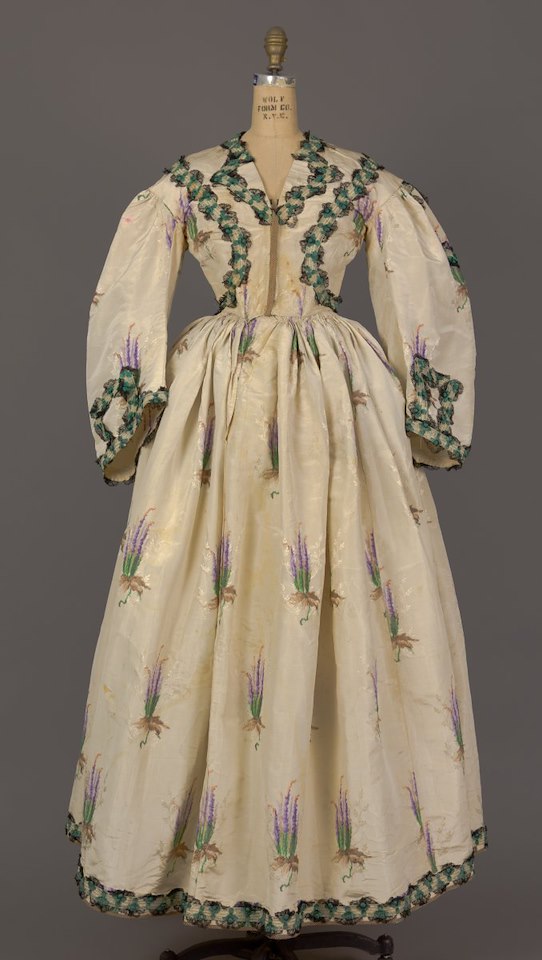
This could explain why, over time, the “traditional” white bridal gown came to be perceived as universal, even where local wedding garments, colors, and symbols had long histories and distinct sacred meanings (see Figure 2). For example, after the 1860s, wedding dresses in Turkey began shifting from traditional colours such as deep reds, blues, purples, and greens to lighter colors, influenced by the West (Micklewright 1989). The white wedding dress became widespread over the 20th century. In short, the white dress signifies religion, but in colonial settings it also signifies power.
The Wearer:
If imperialism helped universalize the white gown as a moral and modern ideal, non‑Western bridal practices reveal alternate genealogies of sanctity and celebration that neither depend on nor prioritize white. The Western wedding dress and the bride’s overall ensemble haven’t changed fundamentally since their appearance among privileged circles in the mid-19th century. Although sartorially, the wedding dress has remained relatively consistent, variations in wedding dresses throughout the period were shaped by economic resources, life events, commissioning practices, regional customs, and broader social conditions. Ultimately, the wedding dress remains a strong representation not only of the values and structures of the society in which it is worn, but also of the individual wearer.
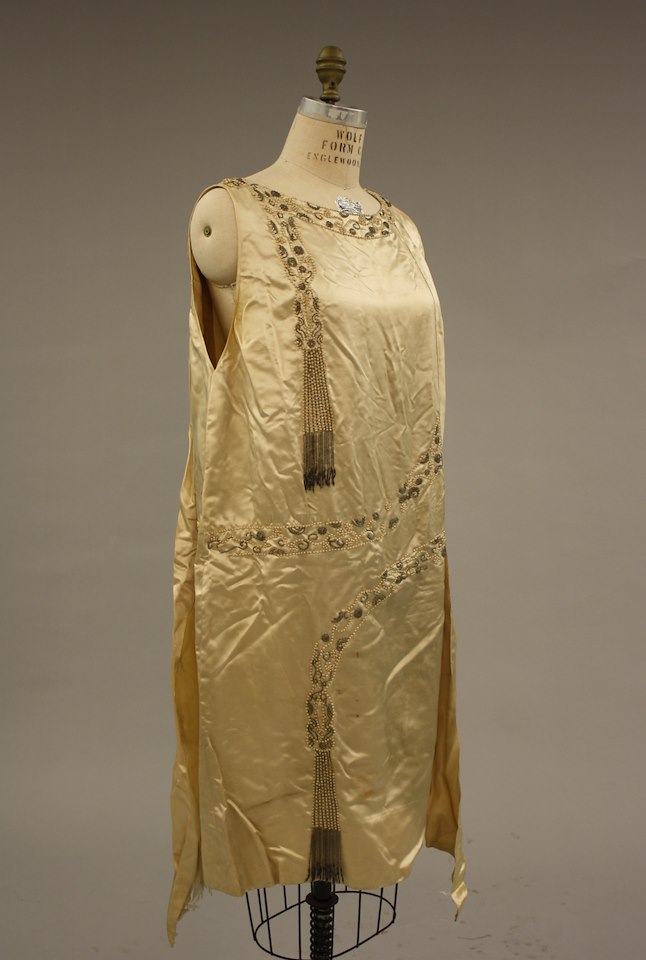
After the turn of the century, the white wedding dress tradition was firmly established and further embellished with lace and pearls, popularized in the Edwardian era (1901-1910) (Schoeny 1998). The period was marked by the emergence of modern social changes, reflected in wedding attire. Although most couples still opted for church weddings, their shorter dresses reflected brides’ growing tendency to omit the word “obey” from their wedding vows (see Figure 3).
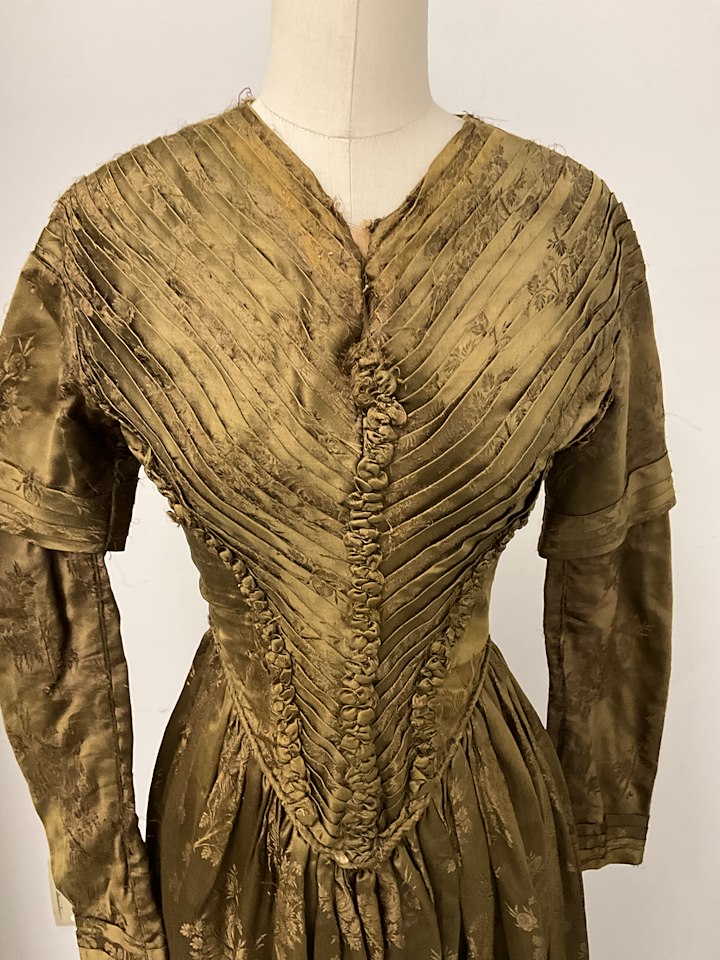
In life, events may clash with conflicting etiquette and traditions. This dress (see Figure 4) was worn by a bride who recently lost her father. While the Bible does not specifically mention the color black in the context of mourning, the association of dark colors with grief is widespread across cultures throughout history. One of the defining characteristics of the 19th century was the strict observance of mourning practices. In the Christian traditions, dark or somber clothing became a customary expression of mourning, aligning with the biblical emphasis on outward expressions of inner states.
Gift of Mary G. Phillips.
Although Western wedding dress, from the iconic white gown to the somber attire worn by brides in half‑mourning, illustrates the interplay between tradition and circumstance, the practices of other cultures reveal an equally complex and varied landscape of bridal customs.
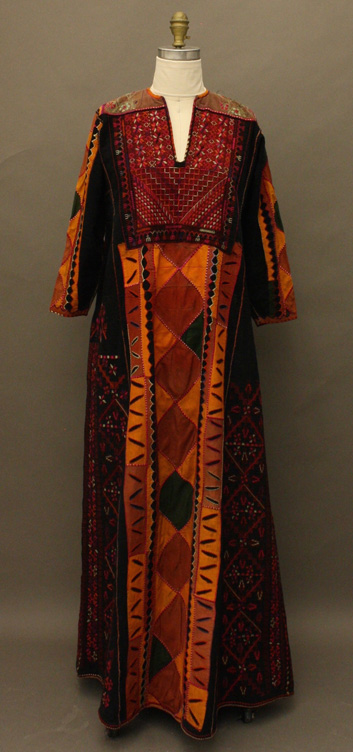
From the end of the Ottoman Empire to 1948, working-class women in Palestine developed complex, detailed, and beautiful techniques for adorning garments (Saca 2007; Denham 2018). The Palestinian wedding gown, or Jallayeh, in Figure 5, is from Na’ney, Palestine – a city outside what is now called Tel Aviv, Israel. It was one of the garments preserved when a family fled from Na’ney to Gaza in 1948 (Denham 2018).
Traditional Ottoman wedding ensembles were commonly constructed of rich, colored fabrics with intricate gold embroidery (see Figure 6). Popular colors for wedding garments included maroon, cranberry, cherry, purple, black, blue, and green (Micklewright 1989). After the 1860s, wedding dresses in lighter colors began to be worn, influenced by the West. In 1898, Naime Sultan Abdülhamit’s daughter, Kemalettin Pasha, wore a white wedding dress. The white wedding dress became widespread over the 20th century.
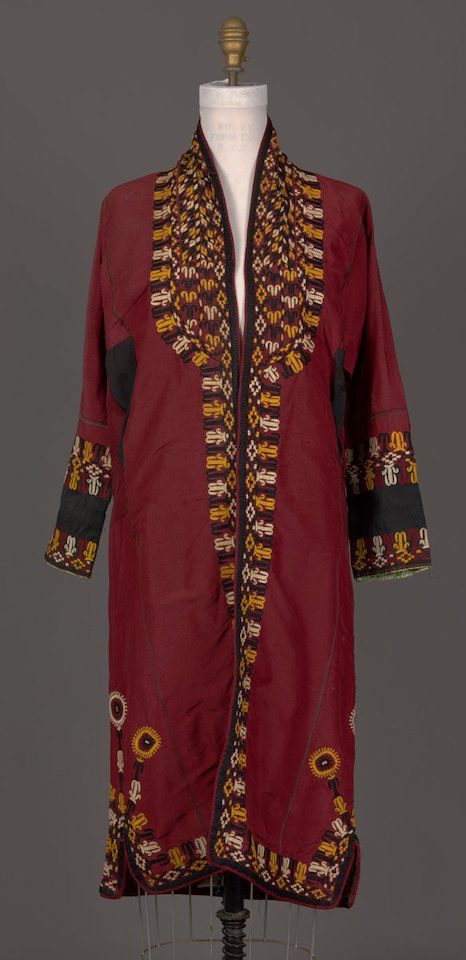
Cornell Textile + Fashion Collection, ID: 2015.30.005.
Gift of Charlotte Jirousek.
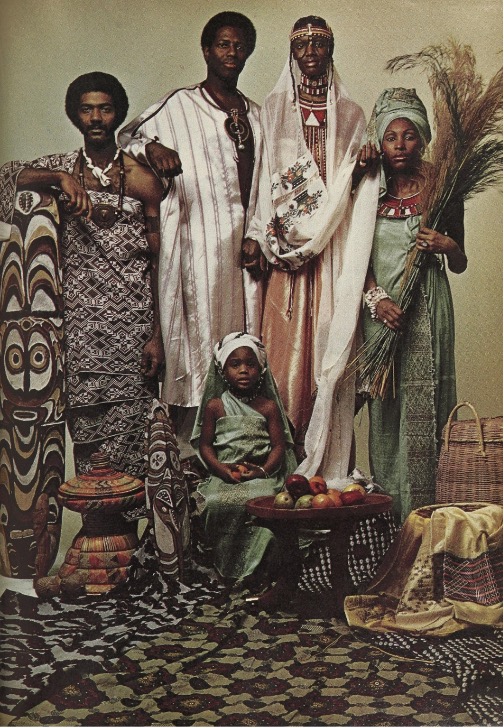
Wedding clothing within the Black diaspora reflects a complex history shaped by colonialism, migration, and cultural resilience. Under European colonial rule, traditional African textiles and dress practices were disrupted as Western clothing was imposed and Indigenous styles were devalued, leading to long‑term shifts in how communities presented themselves during ceremonial events such as weddings. In diaspora communities, wedding attire became an important site for reclaiming cultural identity or for blending African aesthetics (see Figure 7), revealing how dress operates not simply as fashion but as an expression of memory and cultural survival (Byfield).
The symbol of the white wedding dress stands as more than a symbol of purity within Christian ideology, but through its global presence within various cultures and communities, it has also stood as a visual marker of how colonial authority shapes cultural norms. The embodied whiteness of the bridal gown aided the export of European values, which have occasionally overshadowed local traditions as its popularity rose. The white wedding dress reflects not only the global influence of Christian ritual, but also variations in design highlight its symbolism of the shifting expressions of femininity, identity, and social order.
Sephra Lamothe, PhD Student in Apparel Design at Cornell University
Lauryn Grubbs, PhD Student in Apparel Design at Cornell University
22 March 2026
Tags: Wedding, Dress, Christianity, Imperialism, Missions, Bridal wear, white, purity, Queen Victoria
References:
Bastide, Roger. 1967. “Color, Racism, and Christianity.”Daedalus 96 (2): 312-327.
Birren, Faber. 2016. Color Psychology And Color Therapy; A Factual Study Of The Influence of Color On Human Life. Hauraki Publishing.
Byfield, Judith. n.d. Fabricating Archives of African History. Digital exhibition. Cornell University Library, Ithaca, New York. Available at: https://exhibits.library.cornell.edu/dress-cloth-and-identity
Comaroff, Jean. 1996. “The Empire’s Old Clothes: Fashioning the Colonial Subject.” In Cross-Cultural Consumption: Global Markets, Local Realities, edited by David Howes. Routledge.
Denham, Amanda. 2018. “The Jallayeh: A Palestinian Wedding Gown,” Cornell Fashion + Textile Collection (blog), 26 March 26. Available at: https://blogs.cornell.edu/cornellcostume/2018/03/26/the-jallayeh-a-palestinian-wedding-gown/
DuPlessis, Robert S. 2015. The Material Atlantic: Clothing, commerce, and colonization in the Atlantic world, 1650–1800. Cambridge University Press.
Ehrman, Edwina. 2021. The Wedding Dress: 300 Years of Bridal Fashions. V & A Publishing
Hurst, Dawn. 2011. “The Wedding Ceremony-Secularisation of the Christian Tradition.” PhD diss., Loughborough University.
Ledger-Lomas, Michael. 2021. Queen Victoria: This Thorny Crown. Oxford: Oxford University Press.
Micklewright, Nancy. 1989. “Late-Nineteenth-Century Ottoman Wedding Costumes as Indicators of Social Change.” Muqarnas (6): 161-174.
The Museum of British Colonialism. 2023. “‘Crowning the Coloniser’: Queen Victoria, 1837-1901.” 4 May. Available at: https://museumofbritishcolonialism.org/2023-4-22-monarchy-and-empire-victoria/.
Saca, I. & Saca, M. 2006. Embroidering Identities: A Century of Palestinian Clothing. The University of Chicago. Chicago, IL.
Spunner, Suzanne. 2011. “Somewhere Between Meringue and Ivory: The White Wedding Dress.” Art Monthly Australia 242: 31-35.
Strickland, Agnes. 1840. Queen Victoria from her birth to her bridal: In Two Volumes. Great Marlborough Street: Henry Colburn. For more information, see http://www.worldcat.org/oclc/1013361344.