
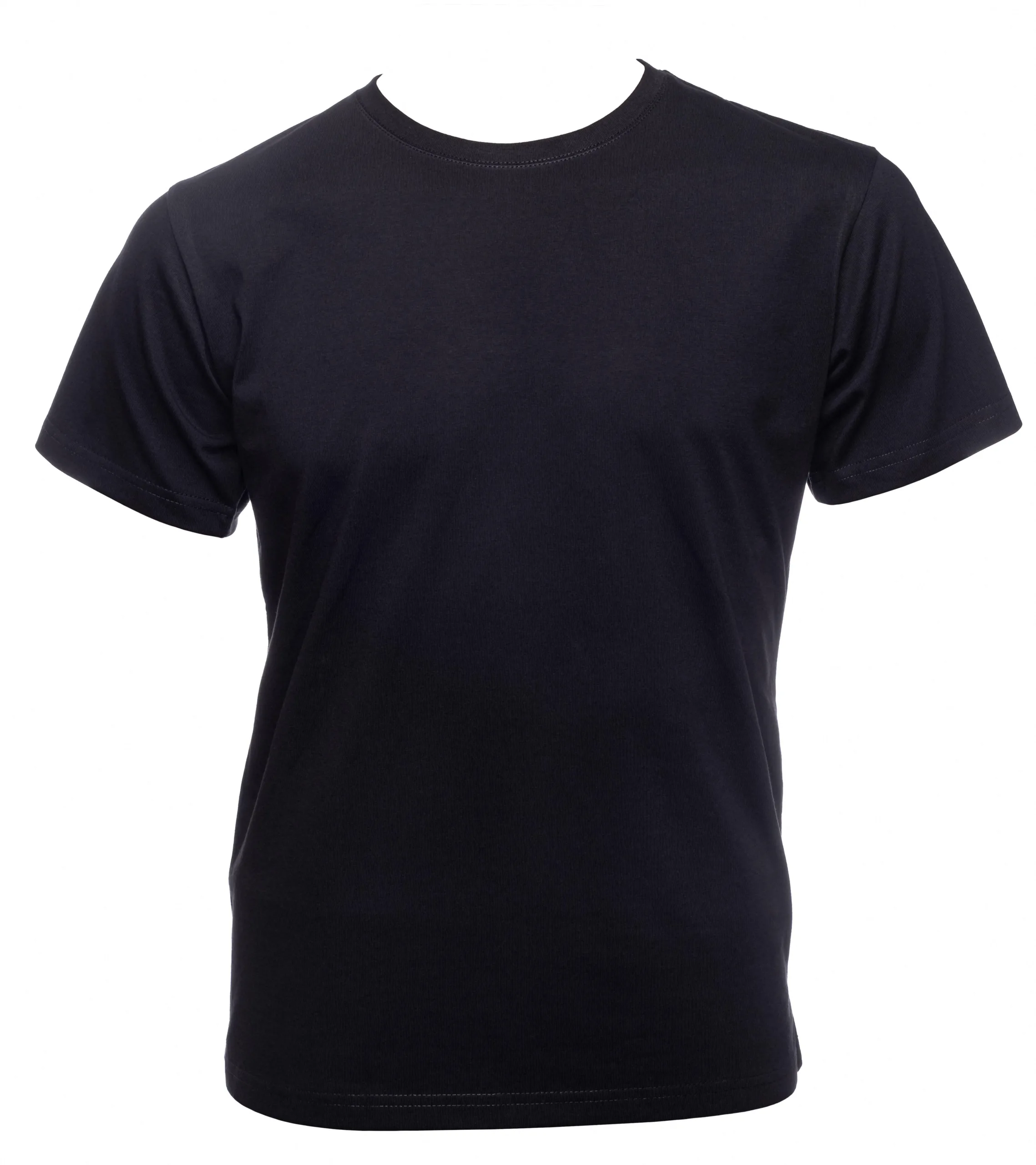
1988 Black T-Shirt during the Satanic Panic
Religion: Christianity, NRMs
Time Period: 1980s, 1990s
Type Of Garment: T-Shirt
Tags: Dress Codes, Everyday, Goth, , Moral Panic, Satanic Panic, T-Shirts, Teenagers
The Object:
After World War II, the T-shirt shifted from underwear to outerwear having been worn and popularized by American soldiers. Given this history, the T-shirt connoted masculinity, as well as American values. As a form of clothing, the T-shirt amplifies the values of free speech and individualism. People can purchase tees with slogans representing their favorite sports team, a tourist destination, or their religious beliefs (Harris 1996; Neal 2014; McDannell 1995). They “are a convenient medium for self-promotion, a sort of mobile curriculum vitae, offering a summary account of the self for public consumption” (Symes 1989: 93).
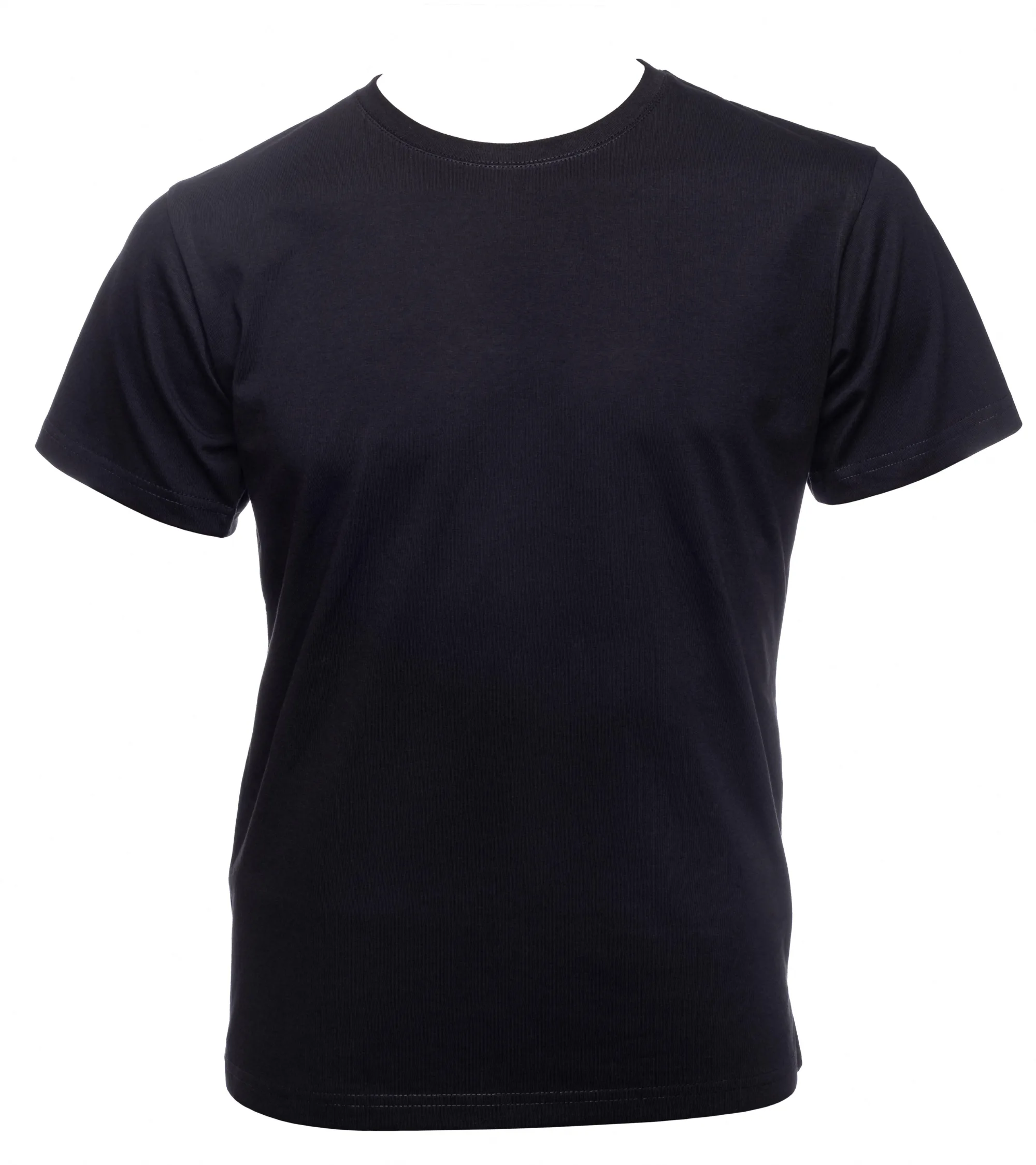
In the 1970s and 1980s, T-shirts featuring evangelical Christian symbols, theology, and Bible verses became increasingly common and were sold through Christian bookstores (McDannell 1995). The genre and outlets for them have only grown since then (see this example). At first glance, then, a plain black T-shirt with its short sleeves, crew neck collar, and lack of decoration does not read as “religious.” Given its lack of religious imagery and slogans, how did a T-shirt become a “religious” garment in the 1980s?
The Context:
During this time, many Americans, especially conservative Christians, feared that Satan and Satanic activity was infiltrating American life. Called the “Satanic Panic,” these fears spread through Christian churches, local media, national news programs, horror films, and popular books, including Michelle Remembers and Satan’s Underground. These sources claimed that “a network of criminal Satanists murdered thousands of people a year,” and “got away with these crimes because they had infiltrated the media and law enforcement,” according to religious studies scholar Joseph P. Laycock (2024, 46). The Panic functioned through fear–fear for teenagers and how popular activities, including heavy metal music and Dungeons & Dragons, led to Satanic activity.
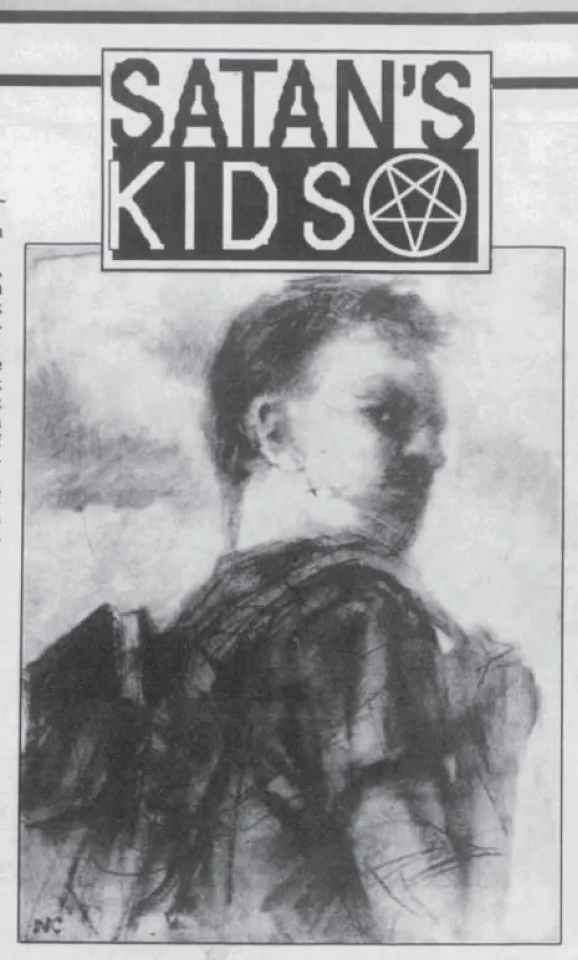
Newspaper articles fueled concerns by popularizing the stereotype of the teen “Satanic dabbler” who listened to heavy metal music, defied parental authority, experimented with drugs, and withdrew from “normal” teen life. According to the media, these were just the first signs of a perilous descent into the dangerous and criminal world of Satanism. Seeking to educate parents on how to detect dabbler behavior, Associated Press writer Lisa Levitt Ryckman advised looking for satanic “trappings”–a list of clothing and jewelry that included black clothing, inverted crosses, and pentagrams (1988; see also Neal 2026).
During the Panic, the black T-shirt, the plainest example of black clothing, was interpreted as a spiritual threat. As numerous newspapers identified signs of the teen dabbler, the Panic transformed black T-shirts into controversial religious garments. In Panic discourse, the black T-shirt symbolized the Satanic menace teens faced and it had already infiltrated the public schools. These accounts quoted “experts,” ranging from pastors to law enforcement to other teens, who claimed Satanic symbols could increasingly be seen in school hallways, on class notebooks, and students’ bodies (Neal 2026).
As these fears increased and the dabbler stereotype became more entrenched, public schools responded by instituting dress codes. In 1989, West Seneca High School in Western New York, for example, prohibited black clothing given its associations with Satanism (Warner 1989). Other schools had similar bans and added Satanic jewelry and symbols to the list (Neal 2026). These prohibitions were often vague, providing few, if any, details about what constituted “Satanic,” which gave the school officials monitoring student dress wide-ranging interpretive powers to define “Satanic” clothing and symbols. Broad dress code bans included black T-shirts as one young woman discovered when she was suspended for wearing a black T-shirt, red sweatshirt, and black boots (Warner 1989).
For school officials, law enforcement, and conservative Christians, the black T-shirt symbolized a rejection of Christianity and rebellion against adult authority. It was a concrete sign of spiritual malaise and danger. School dress codes provided a way for concerned adults to remedy this problem by fostering acceptance of group norms, both spiritual and sartorial.
The Wearer:
While Panic fears about Satan and imperiled youth found concrete form in the black T-shirt, teens experienced it in diverse ways. For example, sociologist Kathleen Lowney’s five-year ethnographic study of a teen “Coven” in Georgia documented how these young people adopted a “Satanic” aesthetic to enhance group bonds and challenge dominant Christian norms (1995). Other teens wore black T-shirts and heavy metal band T-shirts (equally threatening in Panic discourse) to demonstrate their musical interests and fandom. For example, fans at a 1980s Judas Priest concert wore black shirts, black parachute pants, and black boots (Smith 1984). For purveyors of the Panic, heavy metal music (never clearly defined) was another gateway to Satanic activity. This musical fandom and its accompanying attire provided teens with a way to create an identity that differed from that of the dominant preppy aesthetic. And, as one school official noted, many did not know what the symbols meant (“Students: Satanic Signs Everywhere” 1989).
For others, black clothing was a style choice that reflected their identity and emotions. One teen, who wrote to the “Tween 12 & 20,” explained that she was not a “Satan worshiper” and sought advice on how to explain her preference for black clothing to her critical parents. The columnist, educator Robert Wallace, advised her to avoid the “cult-like” impression given by wearing black and add some pops of color to her wardrobe (Wallace 1991). These different examples show the increasing popularity of black clothing and teenagers’ diverse experiences of it. A genuine interest in Satanism may have characterized a small portion of these youth, but not the majority.
What the Satanic Panic and its fears of the black T-shirt missed was a broader change in fashion history, namely the rise of the Goth subculture in the late 1980s and early 1990s. Not recognizable as a distinct group or named until 1992, in its nascent years it developed a distinctive aesthetic that included black clothing, band T-shirts, and silver jewelry featuring inverted crosses and pentagrams. Many wore this attire to critique the dominance of Christianity and existing fashion norms (Brill 2008; Hodkinson 2002). At the same time, though, the sartorial overlap between the teen dabbler and emerging Goth resulted in numerous teens being identified as Satanic dabblers, rather than members of a developing musical-aesthetic subculture (Neal 2026).

The meanings teens ascribed to the black T-shirt were overshadowed by the Panic fears of concerned parents, school officials, conservative Christians, and law enforcement. The framework Panic proponents relied on shut down other interpretive possibilities, turning emerging Goths into budding Satanists. Within this tumultuous context, the black tee was transformed from a plain and ordinary garment into one charged with spiritual significance. For its proponents, the black T-shirt functioned as evidence of Satan’s invasion of everyday domestic life and the Panic’s reality.
This case serves as an important reminder of the central role material culture items play in religious life and that fashion history is religious history (Neal 2019).
Lynn S. Neal, John Allen Easley Professor of Religious Studies, Wake Forest University.
25 August 2026
References:
Brill, Dunja. 2008. Goth Culture: Gender, Sexuality and Style. Oxford: Berg.
Harris, Alice, 1996. The White T. New York: HarperStyle.
Hodkinson, Paul. 2002. Goth: Identity, Style, and Subculture. Oxford: Berg.
Laycock, Joseph P. 2014. Satanism. New York: Cambridge University Press.
Levitt Ryckman, Lisa. 1988. “Satanic Teen Crimes Jolt Parents to Reality,” The Columbian (Vancouver, WA), 14 February.
Lowney, Kathleen. 1995. “Teenage Satanism as Oppositional Youth Culture,” Journal of Contemporary Ethnography 23 (4): 453-84.
McDannell, Colleen. 1995. Material Christianity. New Haven, CT: Yale University Press.
Neal, Lynn S. 2014. “The Ideal Democratic Apparel: T-shirts, Religious Intolerance, and the Clothing of Democracy,” Material Religion 10:2 (2014): 182-207.
Neal, Lynn S. 2019. Religion in Vogue: Christianity and Fashion in America. New York: New York University Press.
Neal, Lynn S. 2026. “Black Clothing and Inverted Crosses: Fashion as Evidence in the American Satanic Panic,” Nova Religio 30 (2): 51-72.
Smith, Dorian. 1984. “Maximum Amps and a Little Fire,” News Tribune (Tacoma, WA), 27 May.
“Students: Satanic Signs Everywhere,” Belleville News-Democrat (IL), 26 November 1989.
Symes, Colin, 1989. “Keeping Abreast with the Times: Toward an Iconography of T-shirts.” Studies in Popular Culture 12: 87-100.
Wallace, Robert. 1991. “Tween 12 & 20,” North County Times (Oceanside, CA), 7 June 1991.
Warner, Gene. 1989. “West Seneca School Bars Students from Class for Wearing Black Clothing,” The Buffalo News (NY), 12 September.