
1967 Apparel of Maharishi Mahesh Yogi
Religion: NRMs
Time Period: 1960s, 1970s
Type Of Garment: Robe
Tags: Beatles, Charisma, Counterculture, Gurus, Hair, Hinduism, Hippies, India, Inner Peace, Meditation, Monks, NRM, Orientalism, purity, Self-Realization, Transcendental Meditation
The Context:
During the late 1960s and early 1970s many new religious movements (NRMs) emerged in the United States. Within this thriving religious marketplace, spiritual teachers from a variety of Hindu traditions came to the United States, including Swami Prabhupada, Guru Maharaj-ji, Swami Muktananda, Swami Satchidananda, and Maharishi Mahesh Yogi (Pluralism Project 2020). In Hinduism, these figures are often referred to as Sannyasins, those who pursue enlightenment through ascetic practices (Dallapiccola 2002). However, in the United States, many people described them as gurus or monks and sought out their spiritual wisdom.
One of the most popular of these new religions was Transcendental Meditation (TM), led by Maharishi Mahesh Yogi (1918-2008), an esteemed guru from India. As a student of Swami Brahmananda Saraswati, he studied meditation and “the wisdom of the Vedic Tradition” (Sawyer and Humes 2023, 6-7). When asked about his teachings, he claimed that he was only passing on blessings from his previous master. Maharishi had great respect for Saraswati and while on stage he often displayed a portrait of Saraswati (Sawyer and Humes 2023, 6-7, 11).
Maharishi first arrived in the United States in 1959, settling in Los Angeles. There he began reaching out to audiences with his message. His form of meditation gained widespread interest as it was applicable and accessible to people from a wide range of backgrounds. He encouraged practitioners to meditate twice a day for twenty minutes in the morning and the evening, resulting in the popular phrase, “TM in the AM and the PM” (Sawyer and Humes 2023, 7). TM also appealed because anyone, regardless of their religious beliefs, could practice TM without giving up their existing views (Sawyer and Humes 2023, 6). Further, the movement’s teachings aligned with American values, including the importance of self-improvement and individualism (Sawyer and Humes 2023, 6).
TM’s theology revolves around the idea that people do not understand their true nature. According to Maharishi, each person has two selves, the physical and the spiritual. The physical self includes one’s mind and body, while the spiritual self provides the foundation that contributes to one’s ultimate purpose. The physical self navigates everyday life, while the spiritual self, developed through the continuous practice of meditation, seeks enlightenment. The goal of TM, then, is experiencing the spiritual (Absolute) self, which results in learning and claiming one’s purpose in life. Maharishi believed that at the heart of TM lies the most valued truth, experiencing transcendence and realizing absolute Self (Sawyer and Humes 2023, 7-8).
The Object:
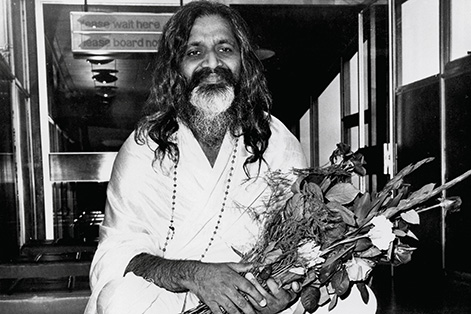
Maharishi’s look, his style and appearance, enhanced his spiritual authority and charismatic leadership. During his many public appearances, he would wear a white robe. The large robe enveloped his body covering him from his shoulders to his ankles (see Figure 1). The robe not only emphasized his ascetic training and simple lifestyle, but also highlighted his Indian cultural roots.
Maharishi fit what religious studies scholar Jane Iwamura calls the figure of an “Oriental Monk.” This stereotype, she argues, appears throughout American popular culture and is identifiable as “the representative of an alternative spirituality that draws from the ancient wellsprings of ‘Eastern’ civilization and culture” (Iwamura 2017, 52). This figure is recognizable through his name, message, attire, and hair. In the West, Maharishi’s look situated him within this spiritual stereotype, which encouraged people to view him as an enlightened figure who possessed immense religious wisdom.
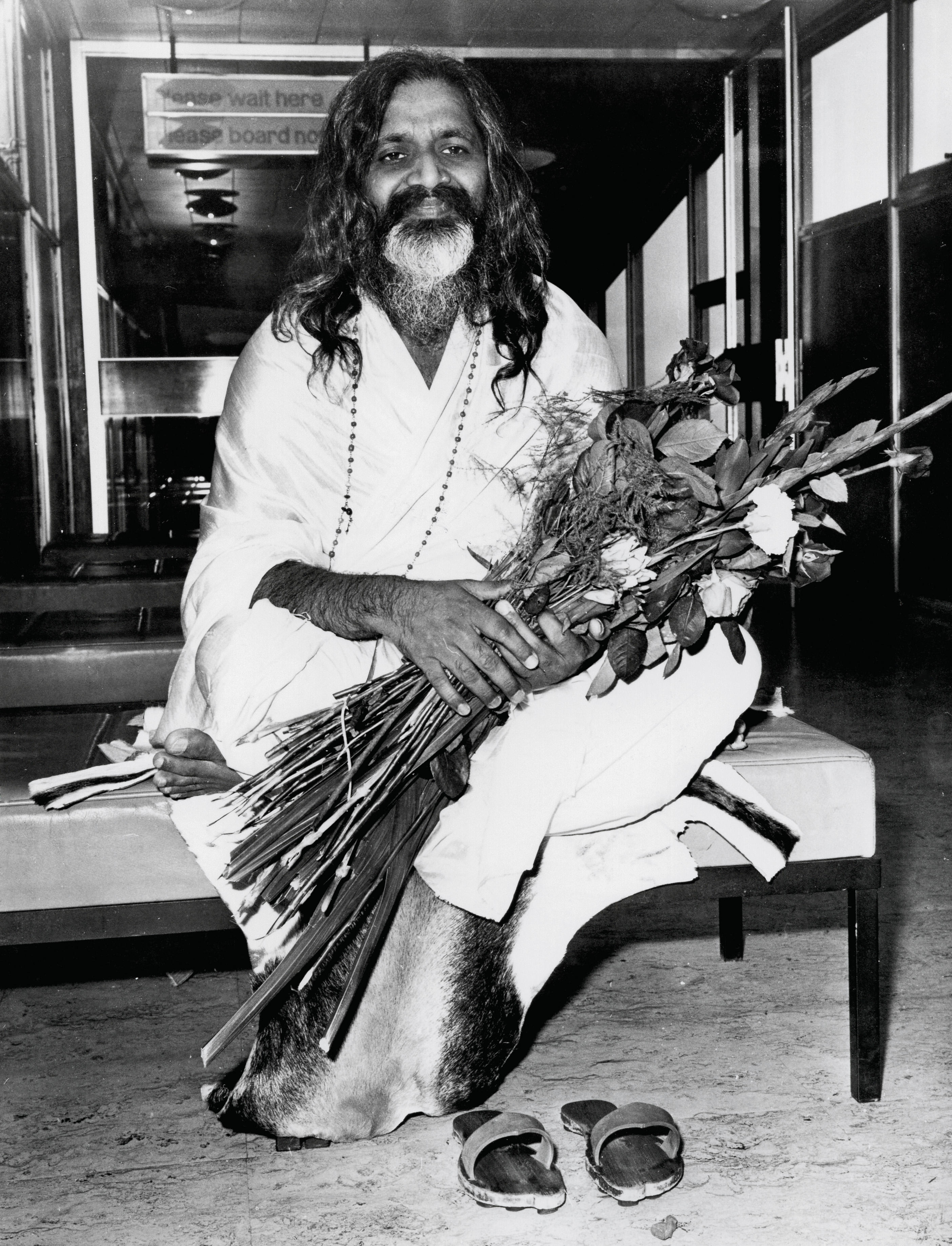
Along with his distinct attire, Maharishi’s long hair and beard set him apart. During this time, mainstream American men wore short hair, while other gurus, such as Swami Prabhupada, shaved their heads as a sign of humility. Maharishi’s long hair aligned him with the style and freedom associated with the counterculture in the 1960s and early 1970s. During this time, young men sported long hair to protest narrow definitions of masculinity and the Vietnam War (Luther Hillman 2015, 32-33). Maharishi’s hair and beard heightened his appearance as an “enlightened sage” and his alignment with the questioning spirit of America’s youth, a demographic that made up the majority of his followers in the 1960s (Sawyer and Humes 2023, 9, 19).
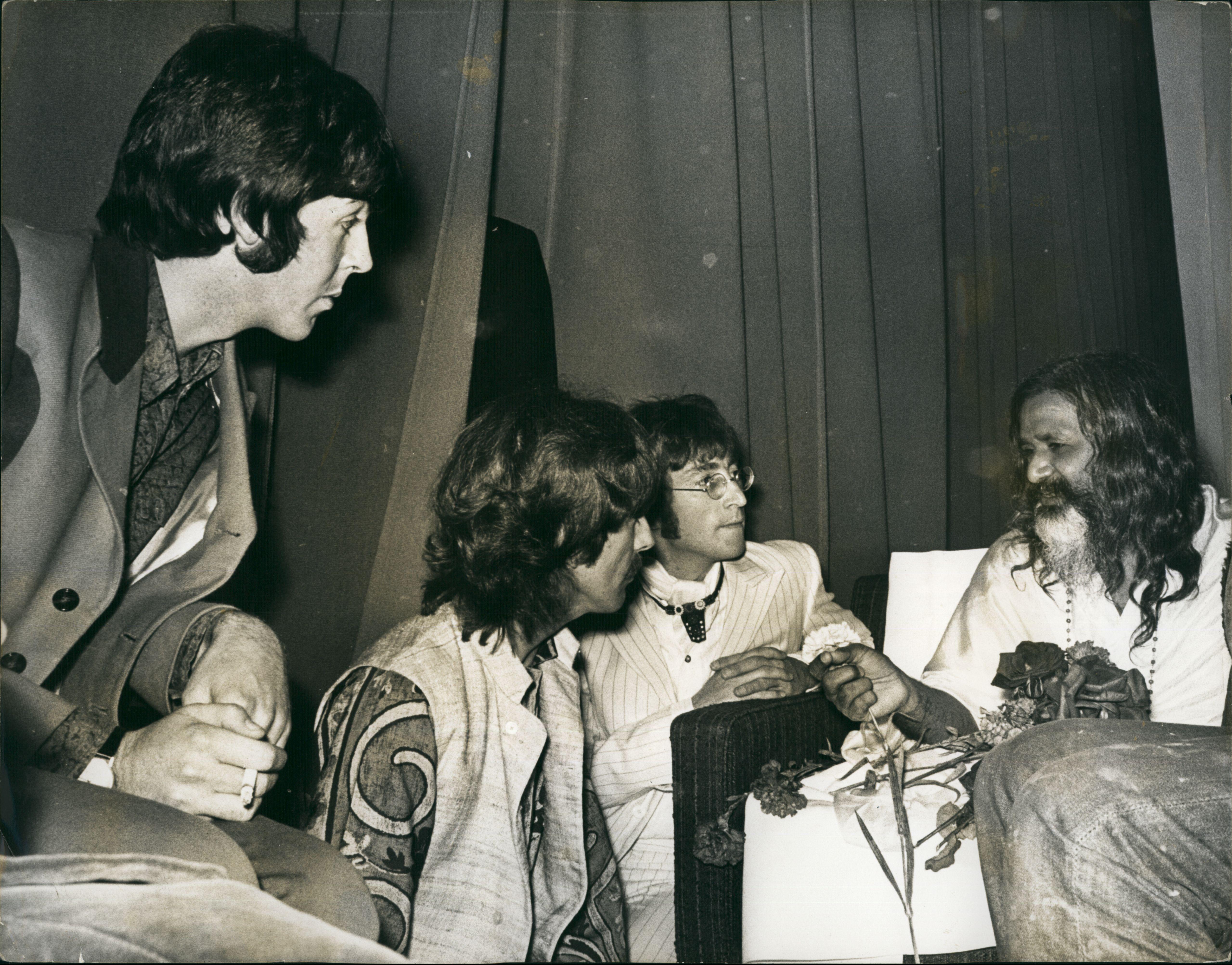
His popularity and fame only grew when the Beatles became involved in the movement in 1967 and early 1968 (see Figure 2). They went to a lecture in London and attended Maharishi’s training course in India. John Lennon stated that “[TM] is the biggest thing in our lives at the moment and it’s come at a time when we need it. We want to learn the meditation thing properly, so we can sell the whole idea to everyone” (quoted in Sawyer and Humes 2023, 21). While the Beatles’ affiliation with Maharishi was short-lived, he “had become deeply identified in the Zeitgeist with the hippies of the counterculture; he even looked like a hippie with his long hair, beard, and beads” (Sawyer and Humes 2023, 22).
The Reception:
Maharishi’s dress and style emphasized his presence as a leader and reinforced his authority. His apparel and appearance set him apart from his followers. He explicitly discouraged followers from adopting his clothing and hair choices. When followers asked about wearing white robes, he responded with the simple answer that it would not make sense, since his followers were not from the Himalayas (Neal 2025, 8). While Maharishi explained his look and attire in terms of his cultural heritage and background, it simultaneously kept his look distinct and unique to him, implicitly highlighting his “superhuman qualities” and “exceptional abilities” (Weber 1947, 358).
Discouraging followers from adopting his style choices also helped him make the movement more appealing to older audiences and those outside the counterculture. Religious Studies scholars Dana Sawyer and Cynthia Humes explain that Maharishi “straddled the ideological fence” by appealing to the youth culture idealism, but also appeasing their parents by condemning “drug use and revolutionary politics” (Sawyer and Humes 2023, 23). In the 1970s, he also insisted that “his followers should bathe more, cut their hair, and wear less garish clothes” (Sawyer and Humes 2023, 23). In 1971, Maharishi instructed followers to “Throw your jeans into the ocean” and they did, at least metaphorically. They swapped tie-dye t-shirts for suits and “their sandals for shoes” (Sawyer and Humes 2023, 23). Devotees renounced their countercultural clothing and committed to the movement. Maharishi, though, continued to wear a white robe while sporting long hair and beard. As TM followers adopted more mainstream looks, Maharishi’s attire and look highlighted his spiritual authority and charismatic leadership.
Gavin Godfrey, Economics Major with a Double Minor in Religious Studies and Statistics, Wake Forest University (‘27).
8 December 2025
Tags: Transcendental Meditation, NRM, Meditation, Self-Realization, Inner Peace, Counterculture, Hippies, Purity, Beatles, Gurus, Monks, Orientalism, Charisma, Hair, India, Hinduism
References:
Dallapiccola, Anna L. 2002. “Sannyasi(n).” Dictionary of Hindu Lore and Legend. Thames & Hudson. https://access.infobase.com/article/945650-sannyasin?rak=1&aid=107358.
Iwamura, Jane. 2017. “The Oriental Monk in American Popular Culture.” In Religion and Popular Culture in America, 3rd ed., edited by Bruce David Forbes and Jeffrey H. Mahan. Berkeley: University of California Press.
Luther Hillman, Betty. 2015. Dressing for the Culture Wars: Style and the Politics of Self-Presentation in the 1960s and 1970s. Lincoln: University of Nebraska Press.
Neal, Lynn S. 2025. Wearing Their Faith: New Religious Movements, Dress, and Fashion in America. Cambridge: Cambridge University Press. https://doi.org/10.1017/9781009304641.
Pluralism Project. 2025. “The Rush of Gurus.” Accessed October 30, 2025. https://pluralism.org/the-rush-of-gurus.
Sawyer, Dana, and Cynthia Humes. 2023. The Transcendental Meditation Movement. Cambridge: Cambridge University Press. https://doi.org/10.1017/9781009365482.
Weber, Max. 1947. “Charismatic Authority.” In The Theory of Social and Economic Organization, edited by Talcott Parsons, translated by A. M. Henderson and Talcott Parsons, 358–363. New York: Oxford University Press.