
1890 Methodist Deaconess Bonnet
Religion: Christianity
Time Period: 1890s, 1900s, 1910s, 1920s
Type Of Garment: Head Coverings
Tags: black, Christian Service, deaconnesses, hat, headcovering, Methodist, Missions, nuns, plain, Uniform, white, women
The Object:
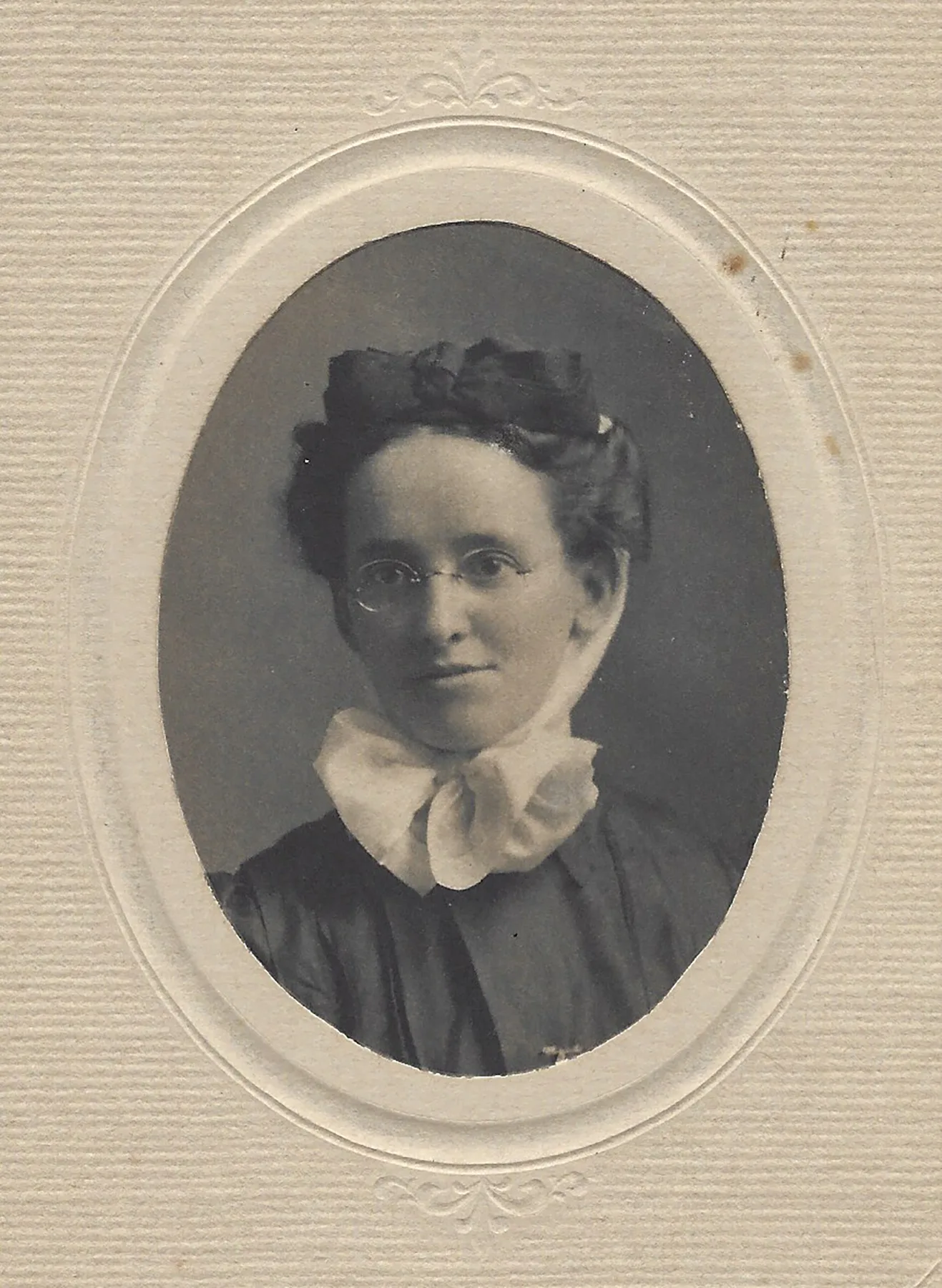
Drawing inspiration from the New Testament reference to Phoebe and influenced by Catholic sisters, Methodists in North America began training and consecrating women as deaconesses in the late nineteenth century. Deaconesses were single women who worked in nursing, teaching, evangelism, and social service under the direction of the church. They were not paid a salary but instead received an allowance and were supported by the community. Along with certain other Protestant groups, deaconesses from both the Northern and Southern branches of the Methodist Episcopal Church adopted a standard costume. As the 1902 Southern Methodist deaconess by-laws stipulated, “A simple uniform shall be worn, consisting of black dress, bonnet with white lawn ties, and white turn-over collar and cuffs.” Since commentators considered the bonnet as the distinctive feature of the costume, we will here focus our attention on that headpiece (see Figure 1). (By-laws 1902; Holding 1893).
The key features of the bonnet, as tersely noted in the by-laws, are “black,” “white,” and “simple.” The black and white color scheme balanced practicality with gentility. The black color of the bonnet made it both thrifty and tasteful. As one deaconess author noted, “It is more economical because, while the first cost of good black is higher than colors, it continues to look well until worn out” (Deaconesses of the Woman’s Home Missionary Society). Black was seen as appropriate for all seasons, meaning that a deaconess needed only one hat. The sturdy, practical black cloth of the hat could effectively hide dirt or stains. Thus, one supporter noted, “The bonnet may be worn a year without any change whatever, except the fresh white ties which are replaced each day” (Dickey 1902).
The bonnet’s white ties required much more maintenance by the wearer. Unlike black, white fabric does not hide dirt, or spilled food, or sweat stains. The hallmark of a white garment is that, once soiled, it is not considered clean until it is white again (Brown 2009). Deaconesses were expected to change the white ties for freshly laundered ones daily. The fewer white ties that were owned, the more often a deaconess would need to expend time, labor and soap on keeping them clean.
The Context:
Certainly, the “white linen” of the bonnet strings evoked images of purity and devotion from the Christian Bible. Revelation 19:8 speaks of the church as “arrayed in fine linen, clean and white: for the fine linen is the righteousness of saints” (King James Version). But the addition of the white ties to the practical black bonnet also witnesses to deaconesses’ concern for a socially respectable appearance. It is notable that the white ties of the bonnet were positioned where the hat met the face, just as the black dress of the deaconess had white collars and cuffs. This insistence on white fabric where clothing meets skin had become a mark of gentility in the eighteenth century in Europe and America, and by the time the deaconesses adopted their garb, white fabric at neck and wrists had become a sign of respectability of the larger American middle class (Bushman 1993). The proper white ties ensured that deaconesses would never be mistaken for inhabitants of the slums where they sometimes labored.
The distinctive bonnet of the deaconess garb was intended to be respectable. But it was not fashionable. In the late 1880s, when the Methodist Episcopal deaconess office was authorized, fashionable women’s hats were tall and narrow and decorated with lace, flowers, ribbons, and feathers. Some hats boasted entire stuffed birds. As Harper Franklin notes on her Fashion History timeline, it was not coincidental that the American Audubon Society was founded in 1886 to protect bird species that had become endangered because of the elaborate millinery trends. Into the 1890s, hats remained highly ornamented, many with wider brims (Ginsburg 1990). Into the first two decades of the twentieth century the size of women’s hats grew ever larger, leading some clergy to declare a war on big hats worn to church (Joselit 2001). The plain deaconess bonnet, intended to withstand the changing of the seasons and the even more capricious winds of fashion, stood in stark contrast to these millinery confections.
Yet, neither was the bonnet, and the garb to which it belonged, considered “reform dress.” Although certain health and dress reformers of the nineteenth century advocated a “bloomer costume” or short skirt and pants ensemble, deaconesses were not advocating this. Deaconesses joined with other nineteenth-century religious groups who, concerned about women’s fashion, were more likely to encourage some kind of simplified dress (Klassen 2004).
The Creator:
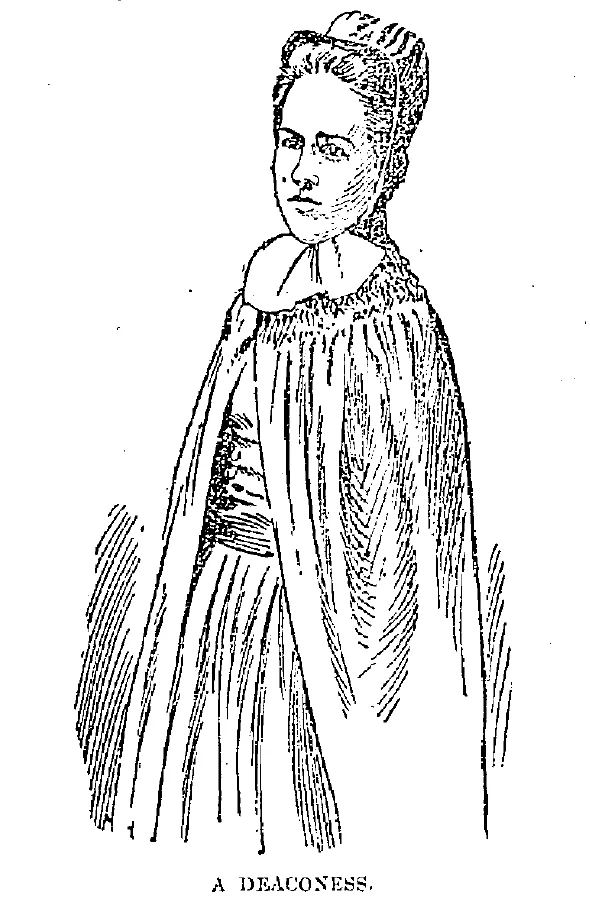
Early Methodist deaconesses had some variations in the bonnet. In the 1880s-1890s, it was referred to as a “cottage-bonnet” and seems to have been a little taller and wider (see Figure 2. But Chicago Home and Training School principal Lucy Rider Meyer’s 1900 compilation of deaconess stories shows a slightly smaller, flatter hat, although it was still named a “bonnet” (see Figure 3).
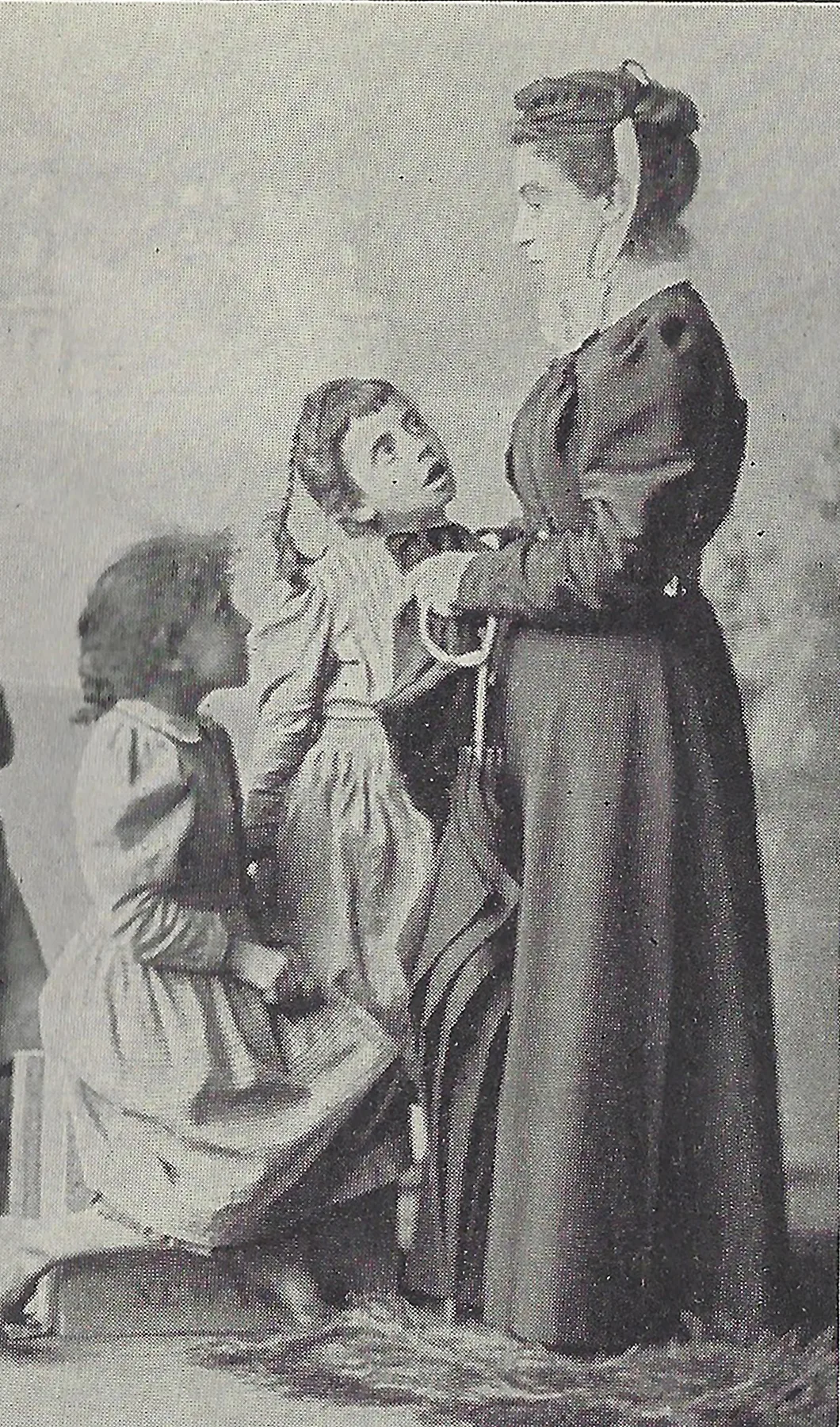
Meyer documented the Chicago deaconesses collaborating on the design for their garb: “One thing we were very decided about: it should be Protestant, not Romish in character. There should be no enshrouding veils, and the hair should not be cut, nor covered with white bands” (Meyer 1889). Protestant deaconesses had to continually fight against the charge laid against them that they were too similar to Roman Catholic nuns, and the bonnet was a key means of distinguishing the deaconess garb from the habit of Catholic sisters. While other churches, notably Episcopalians and Lutherans, could tolerate a short veil for their deaconesses, this was a step too far for Methodists. Early deaconesses who promoted the garb and bonnet may have been wary of comparisons with Catholic sisters, but they appreciated how the nuns’ habit offered them recognition and protection on the streets. As a Southern Methodist woman explained, “Deaconesses must often go alone at night into dark alleys and dangerous streets to minister to the sick or dying, and one has never yet been known to be molested, but she dare not go uncostumed” (Dickey 1902).
Although deaconesses were happy to benefit from the garb’s similarity to the Catholic habit, they insisted on its Methodist bona fides. An early article promoting the garb insisted that “Their dress is almost a copy of that seen in Susannah Wesley’s pictures” (“Objections Considered” 1890). Whether or not they realized it, deaconesses did stand in a Wesleyan tradition of plain dress. Methodist founder John Wesley exhorted his followers to dress inexpensively, in plain linen or wool in somber colors, without ornament. This advice was codified in the Methodist governing document, which among other dress restrictions, prohibited “enormous bonnets.” (Maser 1974; Methodist Episcopal Church 1854). By 1888, the year the deaconess office was authorized in the church, the Doctrines and Discipline no longer issued specific rules of dress but rather enjoined “Let all our people be exhorted to conform to the spirit of the apostolic precept, not to adorn themselves ‘with gold, or pears, or costly array.’ 1 Tim. ii, 9.” (Merrill 1888). Methodist deaconesses, like Methodist laypeople, struggled to reconcile their religious tradition of plain dress with their rising social status.
Included in Lucy Rider Meyer’s compilation of deaconess stories is a curious little tale illustrating the tensions surrounding the deaconess bonnet and garb. In this fanciful account, a talking deaconess bonnet recounts its creation, not of velvet or silk in a millinery shop, but hand sewn of “soft black stuff” by its deaconess wearer for the cost of one dollar and seven cents. The bonnet acknowledges that it attracts attention but is grateful that this gives the deaconess an opportunity to spread her message. The bonnet wishes that the money women spent on elaborate trimmings for their bonnets could be given to the deaconess for her works of charity. Yet the bonnet acknowledges, “I know it isn’t wrong for folks to want to look pretty.” The bonnet concludes with the wish that “all the rich folks in the world made up their minds that they would never wear feathers and flowers and jewels on their bonnets any more at all, so long as babies are dying and mothers are starving and heathen are without Christ” (Meyer 1900). Deaconesses criticized women for their attention to fashion but acknowledged their legitimate right, as women, to seek beauty. By wearing the garb with its distinctive bonnet, deaconesses modeled an alternative way to overcome societal pressure and direct their energy to Christian ends.
The Wearer:
Although the founding generation of Methodist deaconesses seem to have worn their bonnets and garb proudly, subsequent generations grew dissatisfied. Like the dress of many monastic groups and separatist religious communities, the deaconess’ bonnet and garb were frozen at the time of their creation. As an example of what Beverly Gordon has termed “fossilized fashion,” the deaconess costume became increasingly discordant as the years passed (Gordon 1987). When it was instituted in the last decades of the nineteenth century, the garb was described as “becoming” and “not so very different from other women’s clothes” (Holding 113). But by the 1920s, women’s fashions had changed dramatically. Methodist deaconesses in the 1920s began quietly updating their ensembles or setting aside distinctive dress altogether. Other than a circular letter of 1926 among deaconesses that suggests changing the bonnet for a hat, official sources reveal little, and the bonnet slipped quietly out of view. (Brown et al 1926).
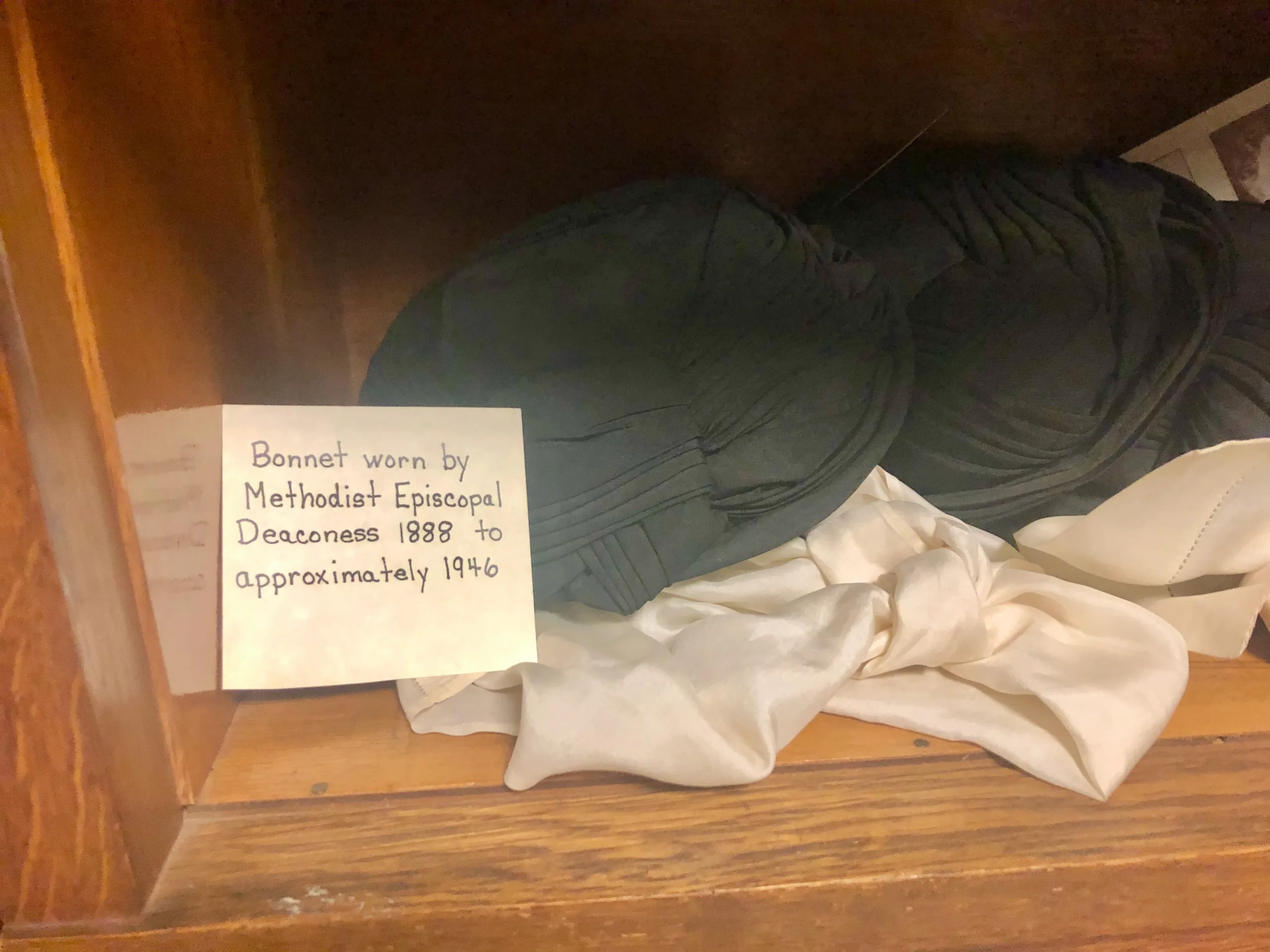
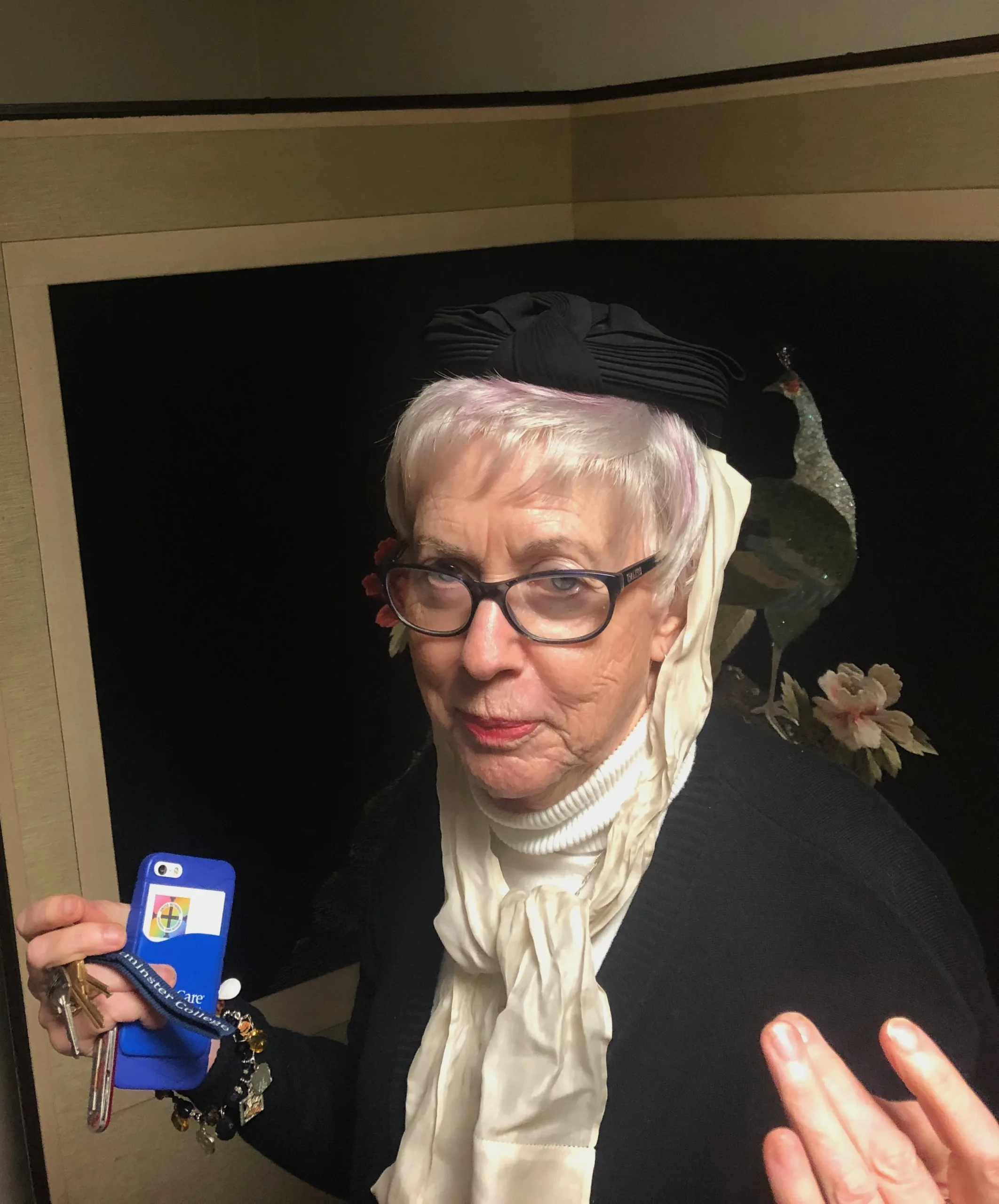
In 2019, I met active and retired United Methodist deaconesses living at the Brooks-Howell retirement community in Asheville, North Carolina while visiting to talk about my book Sanctified Sisters: A History of Protestant Deaconesses. My tour guide for the day, Deaconess Nan Gordon, showed me Brooks-Howell’s collection of deaconess memorabilia, including two examples of the bonnet. She humored me by trying on the bonnet, which almost hid the joyful pink streaks she had added to her hair. Today’s United Methodist deaconesses and their male counterparts, known as Home Missioners, do not wear a garb or distinctive head covering. Instead, Deaconess Nan proudly showed me a tattoo of the deaconess insignia (a Greek cross inside a circle) on her forearm that she had recently acquired. Like Nan’s tattoo of the twenty-first century, the deaconess bonnet of the 1880s to 1920s witnessed to the deaconesses’ distinctive identity and mission of Christian service.
Jenny Wiley Legath, Associate Director, Center for Culture, Society and Religion, Princeton University, July 28, 2026
20 August 2026
Tags: hat, headcovering, plain, Methodist, deaconnesses, uniform, nuns, women, missions, Christian service.
References:
Brown, Kathleen M. Foul Bodies: Cleanliness in Early America. Yale University Press, 2009.
Brown, Mrs. W. R., Miss Grace Steiner, Mrs. D. B. Brummitt, and Miss Mary Woodruff. 1926. To All Deaconesses (and Deaconess Institutions) of the Deaconess Administration of the Woman’s Home Missionary Society. June 24. Records of the Women’s Division of the General Board of Global Ministries, United Methodist Church Archives – GCAH, Madison, New Jersey. Folder 2595-2-6:2.
Bushman, Richard. 1993. The Refinement of America: Persons, Houses, Cities. New York: Vintage Books.
“By-Laws for the Government of Deaconess Work.” 1902. Our Homes 11 (11): 4.
Deaconesses of the Woman’s Home Missionary Society. n.d. The Present Day Outlook on Deaconess Work. Records of the Women’s Division of the General Board of Global Ministries, United Methodist Church Archives – GCAH, Madison, New Jersey. Folder 2603-2-4:2.
Dickey, Mrs. Ida Phillips. 1902. “Why Wear the Costume.” Our Homes 11 (7): 5.
Ginsburg, Madeliene. 1990. The Hat: Trends and Traditions. London: Studio Editions.
Gordon, Beverly. 1987. “Fossilized Fashion: ‘Old Fashioned’ Dress as a Symbol of a Separate, Work-Oriented Identity.” Dress 13: 49–59.
Holding, Elizabeth E. 1893. Joy, the Deaconess. Cincinnati: Cranston & Curts.
Joselit, Jenna Weissman. 2001. A Perfect Fit: Clothes, Character, and the Promise of America. Henry Holt and Company.
Klassen, Pamela E. 2004. “The Robes of Womanhood: Dress and Authenticity among African American Methodist Women in the Nineteenth Century.” Religion and American Culture: A Journal of Interpretation, 14 (1): 39–82. https://doi.org/10.1525/rac.2004.14.1.39
Legath, Jenny Wiley. 2019. Sanctified Sisters: A History of Protestant Deaconesses. New York: New York University Press.
Maser, Frederick. 1974. “Dress.” In The Encyclopedia of World Methodism, vol. 1. United Methodist Publishing House.
Merrill, Bishop, ed. 1888. The Doctrines and Discipline of the Methodist Episcopal Church. Cincinnati: Cranston & Stowe.
Methodist Episcopal Church. 1854. The Doctrines and Discipline of the Methodist Episcopal Church. New York: J. Emory and B. Waugh.
Meyer, Lucy Rider. 1900. Deaconess Stories. Chicago: Hope Publishing Company.
Meyer, Lucy Rider. 1889. Deaconesses, Biblical, Early Church, European, American. Chicago: The Message Publishing Company.
“Objections Considered.” 1890. The Message. February.