
1970s Raëlian Medallion
Religion: NRMs
Time Period: 1970s
Type Of Garment: Jewelry
Tags: charismatic leadership, Claude Vorilhon, jewelry, medallion, Raël, Raëlians, Religious Identity, Star of David, symbols, UFO Religion
The Context:
On December 13, 1973, a Frenchman named Claude Vorilhon claimed to witness a flying saucer descend near him and then encountered an alien lifeform (Palmer 2011). For six days this “Eloha” revealed to him the origins of life and his higher purpose. He learned that these aliens were called “Elohim” and that they were the true creators of all life on Earth. They genetically engineered all of humanity and have done so on two different planets. Vorilhon explained that the Elohim were created by people from other planets who were created from people on other planets and this cycle goes on for an infinite amount of time (Flaherty 2021).
Based on this encounter, Vorilhon changed his name to Raël and founded the International Raëlian Movement (IRM). In keeping with this origin story, the movement emphasizes science, including an endorsement of cloning (Gallagher and Willsky-Ciollo 2021, 509-511). They are open about sexuality and believe in the importance of femininity, claiming that the Elohim are incredibly feminine creatures (Rael.org). They do not believe in any gods or deities and instead believe that their purpose is to share scientific truths about the world.
In addition to sharing these teachings, the movement’s other central mission is to construct “The Embassy” near Jerusalem, a place the Elohim instructed Raël to build for them to land once humanity has reached a higher level of intelligence. For many years since then, the group has worked to find a location, make plans, and raise money for the project but their symbol has proved to be an obstacle. (Flaherty 2021).
Creator:
Much of what we know about the life of Vorilhon comes primarily from his own accounts. He frequently discusses his life and his encounters with the Elohim, but most of this information is drawn from Intelligent Design, a book he wrote as a central resource for his followers. This type of narrative is known as hagiography, a form of writing that emphasizes the most important or admirable moments in a person’s life (Christensen 2006, 233). Hagiographical accounts are common across many religions, but it is important to recognize when a text functions this way and, in this case, to understand that all of this information reflects Raël’s own perspective.
In these accounts, Raël presents himself as “the Prophet of the Age of Apocalypse,” a status signified both by his name change and by how he recounts his life story (Flaherty 2021). For example, Raël claims that his mother was impregnated by one of the Elohim and that his date of conception was December 25th, the same day that the birth of the Christian prophet, Jesus Christ, is celebrated, a date that suggests Raël’s importance in religious history. Raël also details how he felt different and set apart from an early age. While growing up in Ambert, France, the young Claude met a local religious leader, Father Dissard, who laid his hands on Raël’s head as he looked toward the sky and spoke words Raël did not understand. Now Raël interprets this event as Father Dissard talking to Yahweh, Raël’s father, and evidence that he was meant for something greater (Raël, 2005).
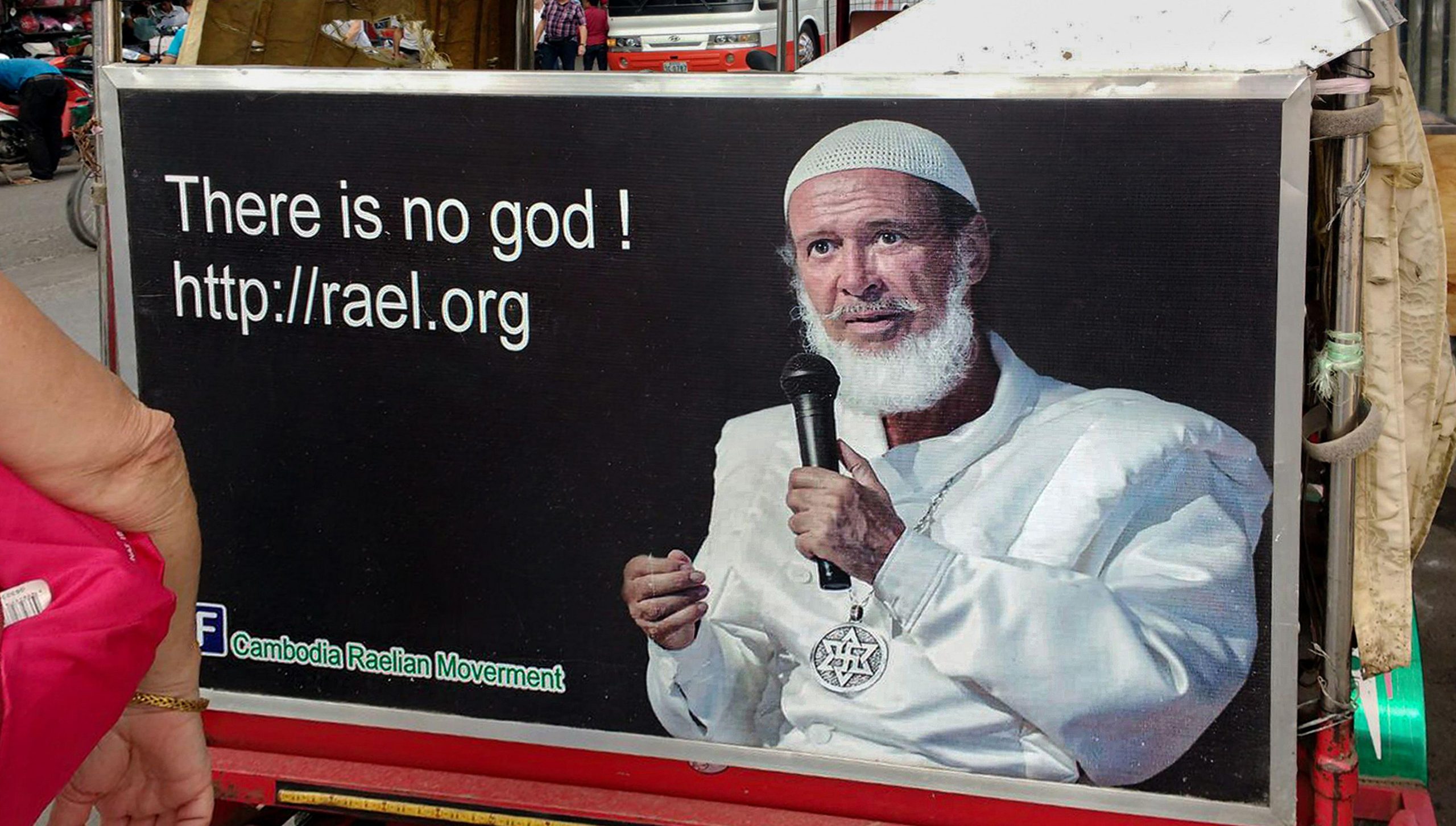
Raël’s prophetic identity draws not only on Christianity but also on Judaism. The name “Raël” comes from the word “Israel.” In addition, Raël teaches that Jewish prophets, such as Moses, were actually half-human and half-Elohim and that the biblical book of Genesis has been misinterpreted (Raël 2005, 114). His connections to Judaism are also personal. He was raised by his atheist maternal aunt and grandmother. Later he learned that his father was Jewish and had lived through the Nazi occupation during World War II (Palmer 2011; Raël 2005, 123). By framing himself as the child of a Jewish refugee, Raël situates himself in the lineage of a persecuted but “chosen” people. At the same time, his claims about Yahweh being his true father create a disconnect between him and his Jewish heritage. Raël uses his connections to Judaism and Christianity to highlight his prophetic identity and situate himself as the true prophet sent by Yahweh, an identity made visible in the medallion he created and wears (see Figure 1).
The Object:
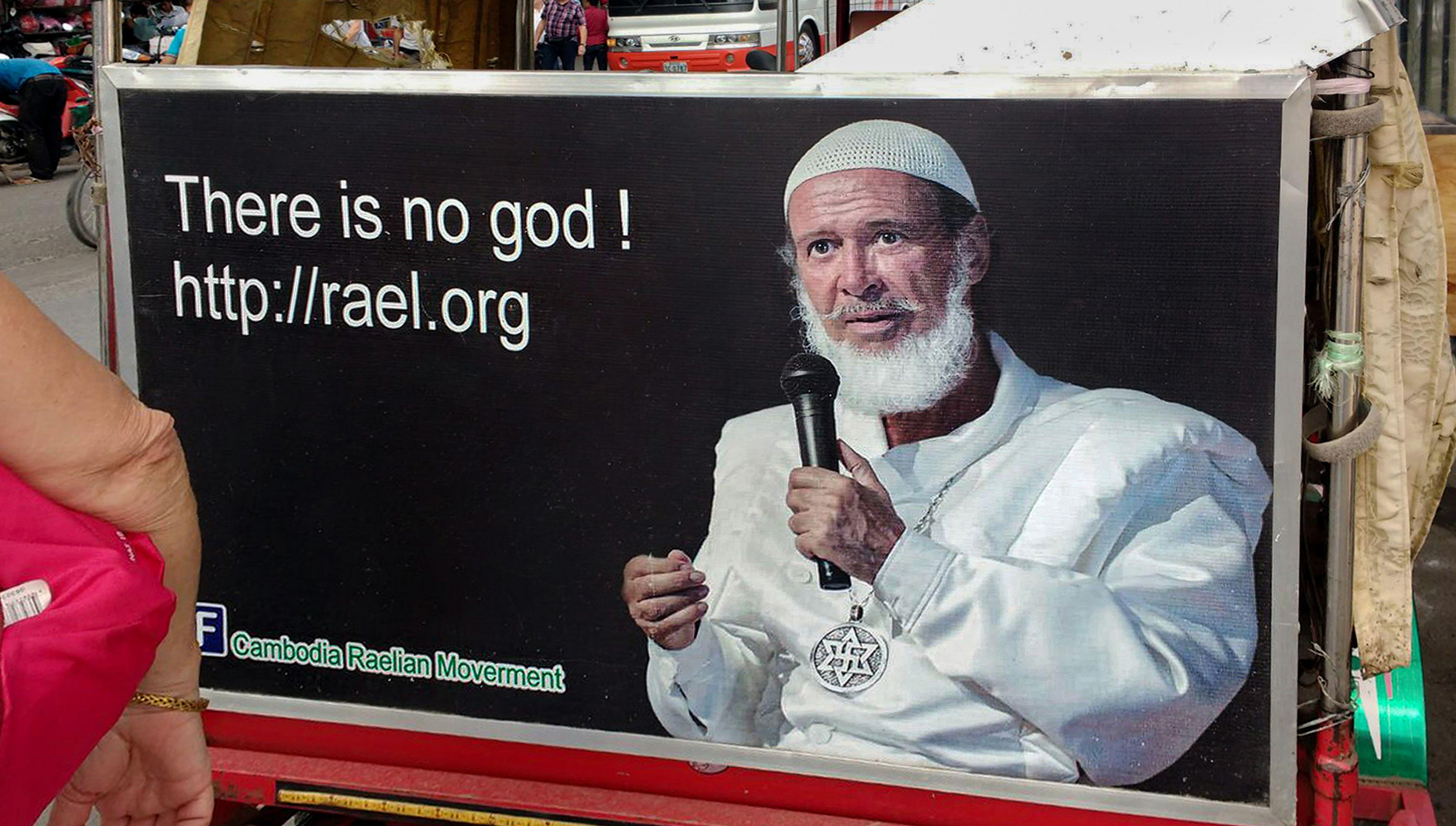
The Raëlian Infinity Symbol is the main embleml of the movement and was created by Raël after having seen it aboard the Elohim’s spaceship during his second encounter with them in the mid-1970s (Flaherty 2021). The symbol itself is made up of a swastika nested within a Star of David with both surrounded by a circle (see Figure 2). For members, the arrangement of the two creates the impression of an infinity symbol. It can usually be found on a silver or gold pendant that is worn around the neck. The simplicity of the medallion and the very fact that it is a pendant allows Raëlians to easily incorporate the symbol into any outfit they may wear, as there is no specific uniform or expected wardrobe for members.
The official Raëlian website describes and explains the infinity symbol. In their view, the Star of David represents the “infinity of space” and the swastika represents the “infinity of time.” Raëlians believe that everything in the universe is in perpetual transformation and that space and time have neither beginning nor end. Everything is cyclical at all levels (Raëlian Movement, n.d.). This symbol connects followers to these beliefs and their extraterrestrial creators.
Raël’s combining of these two symbols simultaneously highlights his prophetic status and its precarious foundations. It points to his revelatory experience with the Elohim, but also requires him to persuade others to redefine and rethink deeply held symbolic meanings. The Star of David, or the Magen David, is considered the symbol of Judaism (Gutmann 2005, 5558-5559) and the swastika is recognized by most as a representation of the Nazi party, anti-Semitism, and the genocide that occurred during World War II.
Raël has made numerous attempts to change the public image of the emotionally charged swastika symbol through explaining the symbol’s historical meanings. The Raëlian website provides the Sanskrit etymology of the word (peace and good fortune), shows how Hindus and Buddhists throughout history used it as a symbol of peace, and explains that it represents the cyclical nature of life, which echoes the Raëlian beliefs of infinity. Raël chose the symbol to represent the IRM because of this theological resonance (Raël 2005, 151).
Through Raël’s attempts to redefine and rehabilitate this symbol, we can see the qualities of charismatic leadership at play. Sociologist Max Weber argued that “charismatic authority repudiates the past” (Weber 1947, 362). In this instance, Raël attempts to repudiate the past meanings of these symbols to emphasize his theological vision about space and time. His abilities were tested when the symbol evoked controversy.
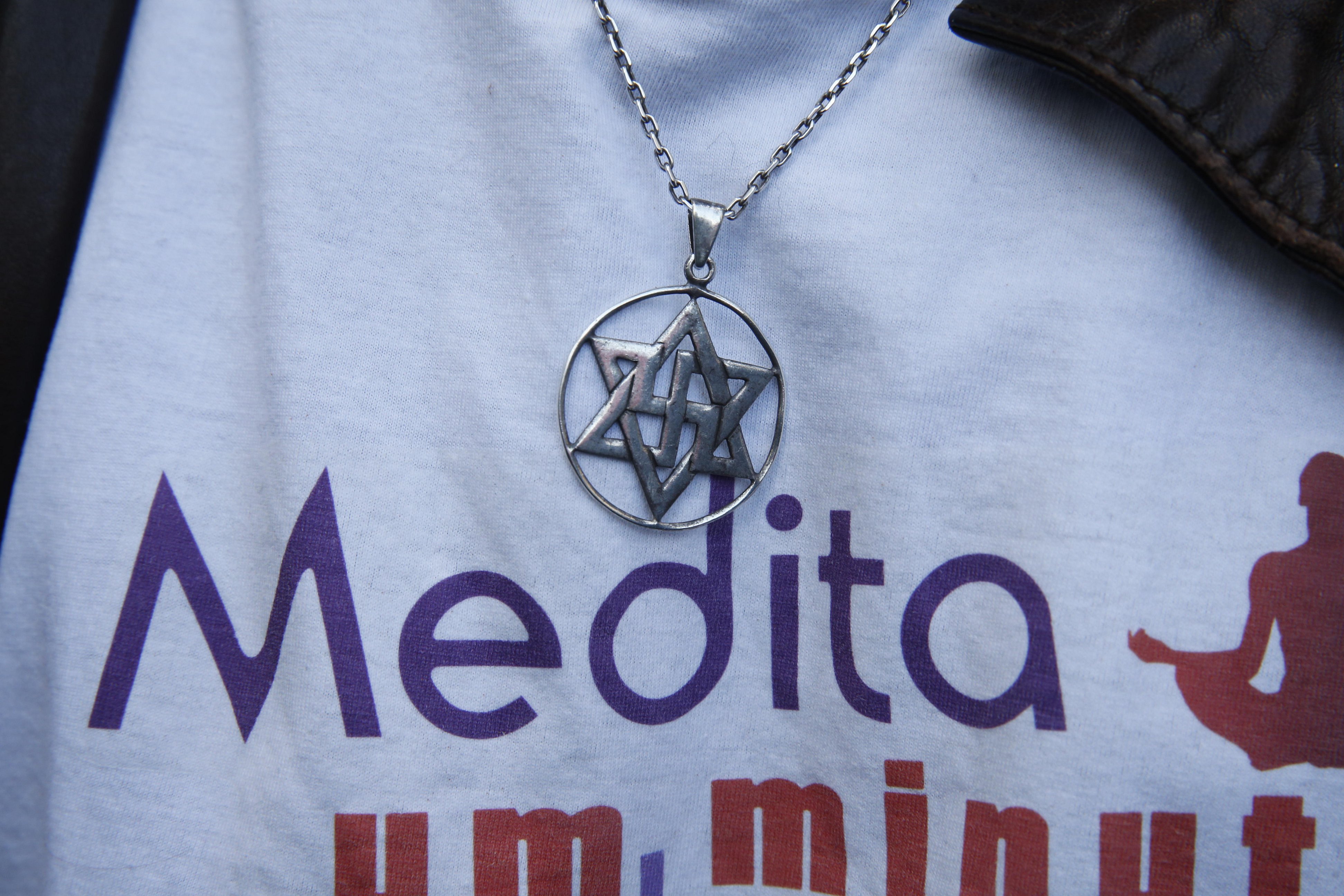
In the early 1990s, the symbol was changed, primarily in North America and Europe, in response to criticisms (Raël 2005, 370). Steve North, of the Jewish Journal, confronted Raël about how the symbol would cause more suffering for those impacted by the genocide of the Nazi regime. Based on the concerns voiced by North and others, Raël agreed to alter the symbol by replacing the swastika with a swirl that resembled that of a galaxy (North 2003) (see Figure 3). The change also reflected Raël’s concerns about achieving the movement’s goals. In a letter to North, Raël thanked him for “making him realize that the old design might be an obstacle to establishing that new embassy in Israel” (North 2003).
In 2007, Raël reinstated the original design worldwide, reasserting his theological teachings despite public pressure. Yet, questions remain. Is Raël’s charisma powerful enough to develop new meanings for these symbols? Is the Raëlian movement prevalent enough to create that change, or will the medallion always be viewed as a controversial combination of existing symbols?
The Wearer:
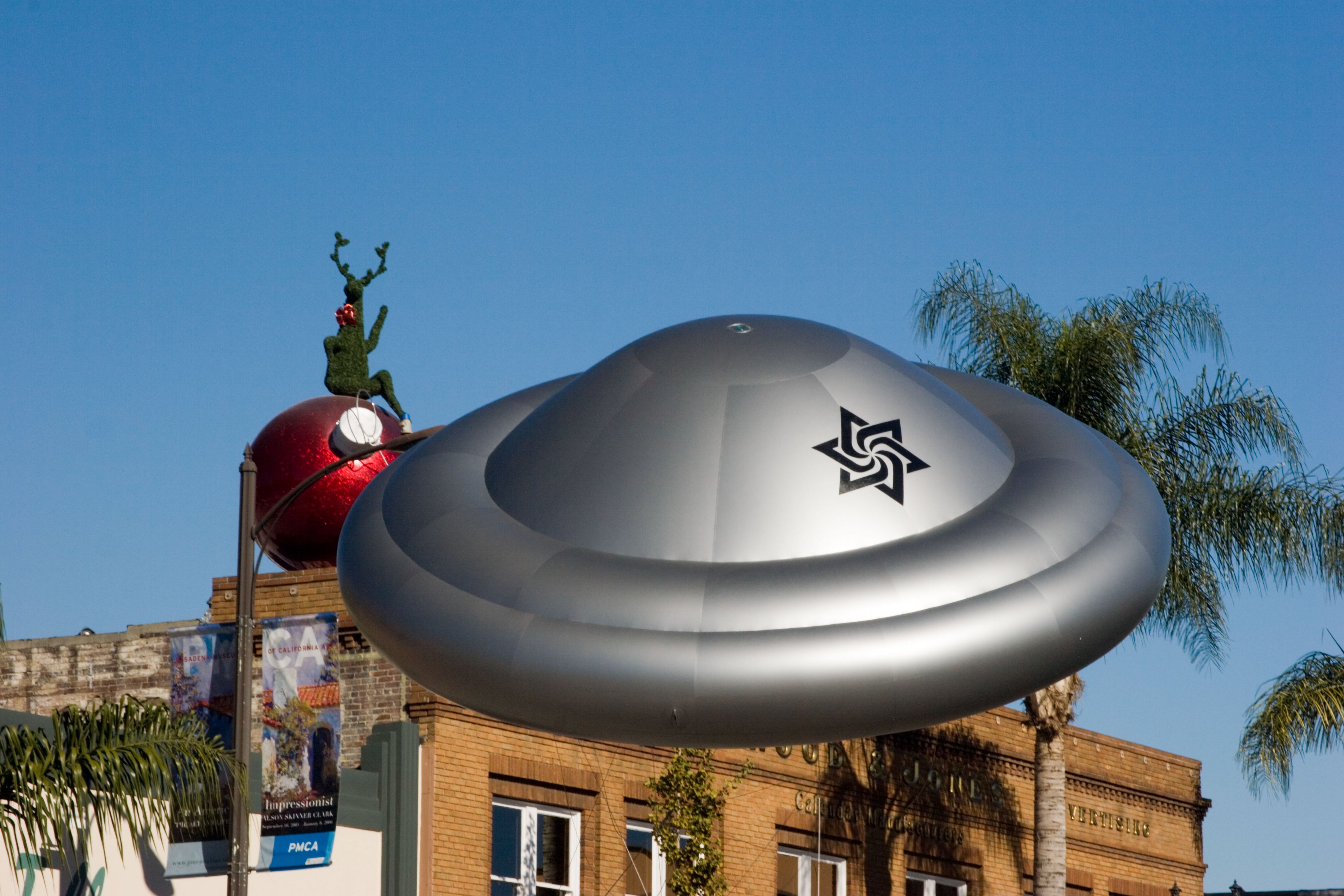
Regardless of the symbol’s contested history, wearing the medallion remains central to Raëlian practice, serving at least three religious functions, namely enhancing individual religious identity, fostering communal bonds, and cultivating a relationship with their founder. First, the controversial nature of the medallion means that those who choose to wear it face scrutiny and comment (see Figure 4). They likely anticipate comments, questions, and criticisms from those who are unfamiliar with the Raëlian movement. In her study of religious identity, sociologist Lori Peek found that controversy and crisis helped create stronger faith as members “felt a need to both explain and demonstrate their faith more strongly than before” (2005, 232). Although Peek’s research focused on Muslim Americans, her finding that controversy and crisis strengthened faith resonates with the Raëlian experience.

In addition, wearing the medallion enhances group identity and cohesion. Raël claims that it allows Raëlians to “recognize one another among believers” (Hughes 1990). Wearers are able to connect with each other through their shared beliefs, and the medallion serves as a way to give the Raëlians a group identity and build community, leading to stronger follower loyalty (Kanter 1972, 73-74, 82-83). Followers also come together for Swastika Rehabilitation Day, where they publicly normalize swastikas by wearing the medallion around their necks and carrying flags featuring the symbol (Raëlian Movement, n.d.).
Lastly, by wearing the medallion followers connect with Raël, who is often pictured wearing the medallion, allowing followers and the public to see his commitment to the symbol and his connection with the Raëlian movement. Raël exemplifies Weber’s charismatic leadership through his own wearing of the medallion (Weber 359-363). A charismatic leader embodies the teachings of their faith and leads by example. Raël is no exception. He demonstrates how charismatic leadership is actively constructed and maintained through his creation of the medallion (Neal 2025, 25-26). Raël uses the pendant as part of his personal “uniform,” encouraging other Raëlians to wear their faith, too.
E. Frances Grant, Double Major in Religious Studies and Communication, WFU ‘28, and Piper Saunders, Religious Studies Major with Health and Human Services Minor and Religion and Public Engagement Concentration, WFU ‘27.
26 February 2026
Tags: UFO Religion, Raël, Claude Vorilhon, Raëlians, jewelry, medallion, Star of David, symbols, religious identity, charismatic leadership
References:
Bromley, David G., and Phillip E. Hammond, eds. 1987. The Future of New Religious Movements. Macon, GA: Mercer University Press.
Christensen, Dorthe Refslund. 2006. “Inventing L. Ron Hubbard: On the Construction and Maintenance of the Hagiographic Mythology of Scientology’s Founder.” In Controversial New Religions, edited by James R. Lewis and Jesper A. Petersen, 227–258. New York: Oxford University Press.
Flaherty, Robert. 2021. “International Raëlian Movement.” Critical Dictionary of Apocalyptic and Millenarian Movements, January. Available at: https://www.cdamm.org/assets/articlePDFs/8433-international-ra%C3%ABlian-movement.pdf.
Gallagher, Eugene V., and Lydia Willsky-Ciollo. 2021. New Religions: Emerging Faiths and Religious Cultures in the Modern World. 2 vols. Santa Barbara, CA: ABC-CLIO.
Gutmann, Joseph. 2005. “Magen David.” In Encyclopedia of Religion, edited by Lindsay Jones, 2nd ed., 8:5558–5559. Detroit: Macmillan Reference USA.
Hughes, John. 1990. “Raelians Believe Aliens Created Life in Outer Space DNA Lab.” Anchorage Times, 5 January, 7.
Kanter, Rosabeth Moss. 1972. Commitment and Community: Communes and Utopias in Sociological Perspective. Cambridge, MA: Harvard University Press.
Neal, Lynn S. 2025. “Clothing and the Creation of the Cult Leader.” In Wearing Their Faith: New Religious Movements, Dress, and Fashion in America. Cambridge: Cambridge University Press.
North, Steve. 2003. “Sex, Space and Swastikas.” Jewish Journal, 2 January. Available at: https://jewishjournal.com/judaism/up_front/7232/.
Palmer, Susan J. 2011. “The Raelian Movement: A Challenge to Sexual Mores and Scientific Orthodoxy.” In The New Heretics of France: Minority Religions, la République, and the Government-Sponsored “War on Sects.” Oxford Academic. https://doi.org/10.1093/acprof:oso/9780199735211.003.0004.
Raël. 2005. Intelligent Design. n.p.: International Raëlian Movement. https://www.rael.org/eb/intelligent_design_en/.
Raëlian Movement. n.d. “Symbol-Infinity.” Available at: https://www.rael.org/symbol-infinity/.
Sperling, S. David. 2005. “God: God in the Hebrew Scriptures.” In Encyclopedia of Religion, edited by Lindsay Jones, 2nd ed., 5:3537–3543. Detroit: Macmillan Reference USA.
Weber, Max. 1947. “Charismatic Authority.” In The Theory of Social and Economic Organization, edited by Talcott Parsons, translated by A. M. Henderson and Talcott Parsons, 358–363. New York: Oxford University Press.